PAC gains votes, but its next test lies inside council chambers


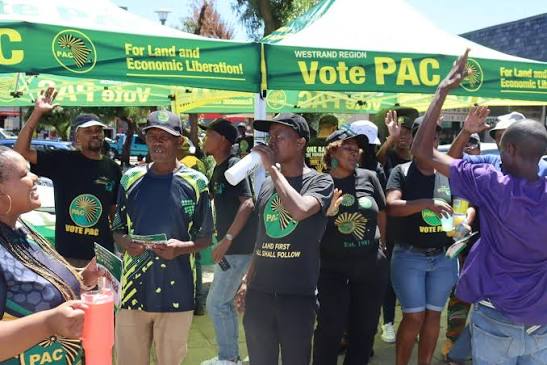
JOHANNESBURG — The PAC’s emerging municipal election result shows modest growth rather than a breakthrough, leaving the party with a practical challenge: turning a small electoral base into visible local influence. Its willingness to enter coalition negotiations could create opportunities, but those agreements will need to deliver more than positions for party representatives.

At the 08:43 update on 7 November, ESP’s dashboard of IEC results recorded 49,154 proportional representation votes for the Pan Africanist Congress of Azania, compared with 27,276 on the same ballot measure in 2021. With 98.4% of voting districts reporting nationally, its provisional PR share stood at approximately 0.34%, against about 0.23% five years earlier. These are PR figures, not combined totals across municipal ballots.
The increase deserves recognition. The PAC has already recorded substantially more PR votes than its completed 2021 total, so describing its performance simply as stagnation would overlook a measurable improvement. Equally, growth from a small starting point should not be confused with a major shift in electoral support. The party remains below half a percent on this national measure.
A wider campaign needs deeper local support
Ahead of the election, PAC president Mzwanele Nyhontso said the party intended to contest a record number of municipalities, fielding candidates across all provinces and metropolitan councils. That ambition provides useful context for the increased vote count: a broader campaign can create more opportunities to attract support, although the available figures do not establish how much growth came from expansion rather than stronger backing in existing areas.
The next assessment must therefore happen municipality by municipality. A national total cannot show whether support is concentrated enough to secure representation, whether established branches have strengthened, or whether votes are spread thinly across a larger electoral footprint. Final council allocations will provide a better measure of the political value of the increase.
For a small party, depth can matter more than reach. A recognisable councillor who consistently resolves complaints and scrutinises municipal spending can establish a durable base. Appearing on more ballots expands the opportunity to win support, but sustained local organisation gives residents a reason to return to the party at the next election.
Coalition access comes with accountability
Nyhontso has already indicated that the PAC is open to coalition discussions in Eastern Cape municipalities. Speaking at the results centre on 5 November, he said the party would consider working with others around an agreed programme focused on service delivery, presenting cooperation as a strategic choice.
That position is pragmatic, but willingness to negotiate does not establish bargaining power. The PAC’s influence will depend on where it wins seats, whether those seats are needed to form a governing majority, and what alternative arrangements larger parties can pursue.
Where an agreement becomes possible, the party should make its commitments measurable. Residents should be able to identify the services it has undertaken to improve, the responsibilities assigned to its representatives and the progress made. Without that clarity, coalition participation risks making a small party accountable for an administration whose decisions it has limited power to shape.
Opposition also offers a route to relevance. Effective scrutiny of contracts, expenditure and service failures can demonstrate public value without a mayoral position. For the PAC, building a record in a few municipalities may offer a more credible foundation for expansion than claiming influence wherever coalition discussions take place.
The provisional result gives the party something to build on, but not grounds to declare a revival complete. Its next test is whether additional votes become council representation and whether that representation produces work residents can recognise. That is where modest electoral growth could become a lasting political recovery.
Readers can follow the latest available election results through TownPress’s live dashboard, available across the website, or visit our Election Results and Results Breakdown pages. Results remain provisional until officially declared by the IEC.
Anyone with additional information can contact the press desk at press@townpress.co.za or drop a tip.