Phala Phala: ATM Opposes Ramaphosa’s Bid To Set Aside Section 89 Report


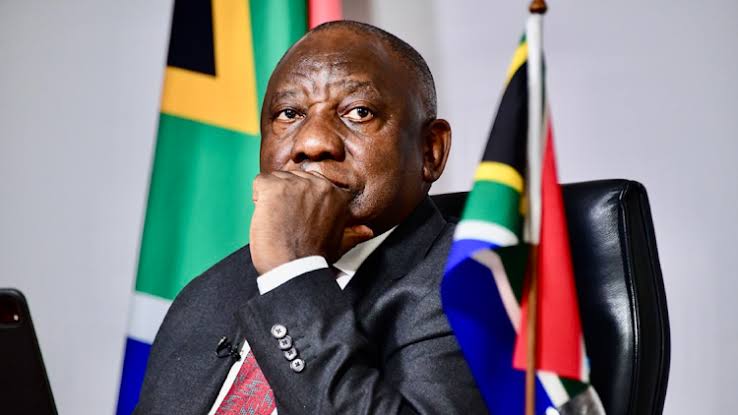
The African Transformation Movement (ATM) has opposed President Cyril Ramaphosa’s application to have the Section 89 independent panel report set aside, arguing that his legal challenge is premature and should be dismissed.

Advocate Anton Katz SC, representing the ATM and its leader Vuyolwethu Zungula, told the Western Cape High Court on Wednesday that the judiciary should not intervene while Parliament’s impeachment process against Ramaphosa was still underway.
Katz argued that Ramaphosa had failed to demonstrate any material or irreversible harm that would justify the court intervening at this stage.
Ramaphosa approached the court seeking to overturn the report of the Section 89 independent panel, which found in November 2022 that there was sufficient evidence for him to answer four impeachment charges linked to the theft of approximately US$580,000 in foreign currency from his Phala Phala game farm in Limpopo in February 2020.
The panel, chaired by former chief justice Sandile Ngcobo, concluded that Ramaphosa should face a public impeachment inquiry into the allegations.
However, the National Assembly voted in December 2022 against proceeding with the impeachment process.
The Constitutional Court overturned that decision on 8 May and ordered that the panel report be referred to Parliament’s impeachment committee, effectively reviving the matter more than three years after the initial vote.
The controversy dates back to June 2022, when former State Security Agency director-general Arthur Fraser laid a criminal complaint alleging that millions of dollars had been stolen from Ramaphosa’s farm and that the matter had subsequently been concealed.
Zungula relied on Fraser’s allegations when he initiated the impeachment process against Ramaphosa in Parliament.
The impeachment committee was later prevented by the Constitutional Court in July from conducting public hearings pending the outcome of Ramaphosa’s review application.
The case is being heard by a full bench comprising Judge President Nolwazi Mabindla-Boqwana, Judge Mark Sher and Judge Ncumisa Mayosi. Arguments are expected to continue until Friday.
ATM Challenges Ramaphosa’s Court Application
Katz argued that Ramaphosa should first raise his concerns about the Section 89 panel’s findings through Parliament and only approach the courts once the parliamentary process had been completed.
He maintained that the impeachment process was designed to be dealt with as a single parliamentary process rather than being challenged in court at different stages.
Katz further argued that Ramaphosa would still have an opportunity to challenge the allegations during the parliamentary process, claiming that the impeachment committee could halt proceedings if the evidence proved insufficient.
However, Judge President Mabindla-Boqwana questioned this argument, pointing out that Parliament’s rules did not appear to give the impeachment committee the authority to terminate an inquiry on its own.
She questioned whether there was effectively any mechanism within the parliamentary process that could prevent Ramaphosa from having to face an inquiry.
Judge Sher also challenged Katz on why Ramaphosa should be required to appear before an impeachment committee if the evidence underlying the four charges was insufficient.
The judges raised broader concerns about the consequences of forcing the president to undergo an impeachment inquiry, particularly given the constitutional responsibilities attached to his office.
Mabindla-Boqwana noted that an impeachment process would not affect Ramaphosa alone, but could have wider implications for the country.
Katz nevertheless maintained that the separation of powers prevented the judiciary from dictating how Parliament should conduct its constitutional responsibility to hold the executive accountable.
He referred to the Constitutional Court’s Nkandla judgment, arguing that courts should not prescribe to Parliament how it should scrutinise executive conduct.
Ramaphosa Questions Validity Of Panel Report
Ramaphosa’s legal team, led by Advocate Wim Trengove SC, argued that the Section 89 panel had applied the wrong legal test when assessing the allegations against the president.
The parliamentary rules provide that a president may be impeached for serious misconduct that is deliberate and committed in bad faith. Trengove argued that although the panel acknowledged this requirement, it failed to properly apply it when considering each of the four charges.
He also argued that the panel was required to determine whether there was sufficient evidence to justify an impeachment inquiry. Instead, according to Trengove, the panel applied a prima facie test, which he described as a lower threshold that placed greater emphasis on incriminating evidence.
Trengove further criticised the panel for setting out Ramaphosa’s response to the allegations without properly weighing his version against the evidence presented against him.
The president’s legal team has asked the court to set aside the entire Section 89 report. Trengove argued that because the report dealt with four charges as a whole, a defect affecting one charge would render the entire report invalid.
Ramaphosa has consistently denied wrongdoing in connection with the Phala Phala matter and has maintained that the foreign currency found at the farm was money received from the sale of game.
Katz is expected to address the merits of the Section 89 panel report on Thursday, where he will argue against the criticisms raised by Ramaphosa’s legal team.