


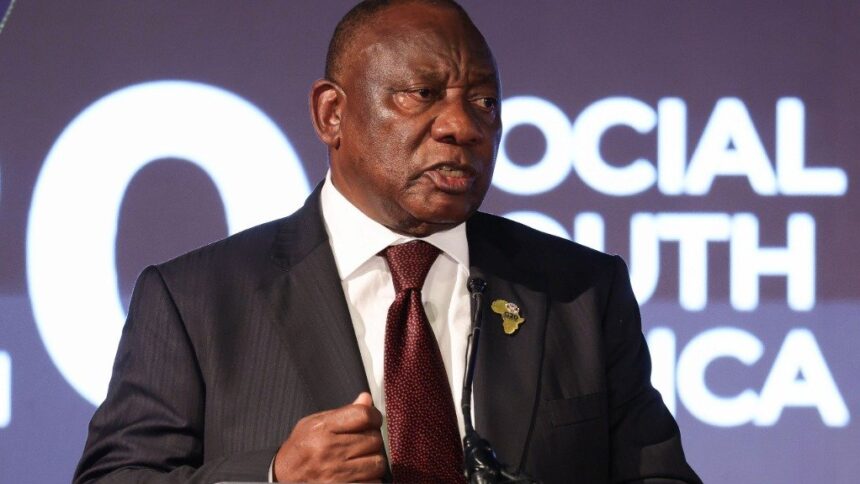
President Cyril Ramaphosa has announced the establishment of a national water crisis committee to confront South Africa’s deepening water challenges, saying he will personally chair the body to ensure a coordinated response.
The announcement was made during his State of the Nation Address on Thursday, against the backdrop of widespread water outages in parts of Gauteng and other provinces. In Johannesburg, prolonged disruptions have sparked community protests, with residents voicing anger over unreliable access to basic services.
Ramaphosa acknowledged the severity of the crisis and conceded that solutions would not be immediate. He described water as one of the most pressing concerns facing communities across the country, from major metros to smaller towns, noting that recent demonstrations reflect growing public frustration.
In response to the unrest, Water and Sanitation Minister Pemmy Majodina, Deputy Minister David Mahlobo and Cooperative Governance and Traditional Affairs Minister Velenkosini Hlabisa were withdrawn from attending the SONA proceedings and deployed to Gauteng to engage directly with affected communities. According to the president, repair work on damaged infrastructure is under way and reservoirs are gradually being replenished.
Ramaphosa admitted that long standing planning failures and inadequate maintenance by municipalities lie at the centre of the crisis. He said empty taps are the result of systemic weaknesses and years of infrastructure neglect, stressing that there is no quick fix to the problem.
To strengthen long term water security, government is investing in the construction of new dams, upgrading existing systems and allocating R156 billion in public funding for water and sanitation infrastructure over the next three years. The president emphasised that the core issue is not the country’s overall water supply, but the ability to reliably deliver water to households.
He also revealed that the creation of a national water resource infrastructure agency is in its final stages. The agency is expected to oversee water infrastructure more effectively and mobilise additional funding. In addition, amendments to water services legislation will empower government to hold service providers accountable, including withdrawing licences where performance standards are not met. Where municipalities are unable or unwilling to deliver services, alternative structures may be appointed to step in.
Drawing parallels with government’s response to load shedding, Ramaphosa said the new committee would mirror the structure of the National Energy Crisis Committee, which was formed to coordinate efforts to stabilise the electricity supply. He argued that a focused national plan had helped the country navigate the energy crisis and that a similar approach would now be applied to water.
The national government plans to deploy technical expertise and resources to struggling municipalities and will use constitutional and legislative powers to intervene where necessary. Ramaphosa made it clear that the national executive would not remain passive in situations where local authorities fail to resolve persistent water challenges.

The formation of the committee marks a significant escalation in government’s response as pressure mounts to restore reliable water supply to affected communities.











Facebook Comments