


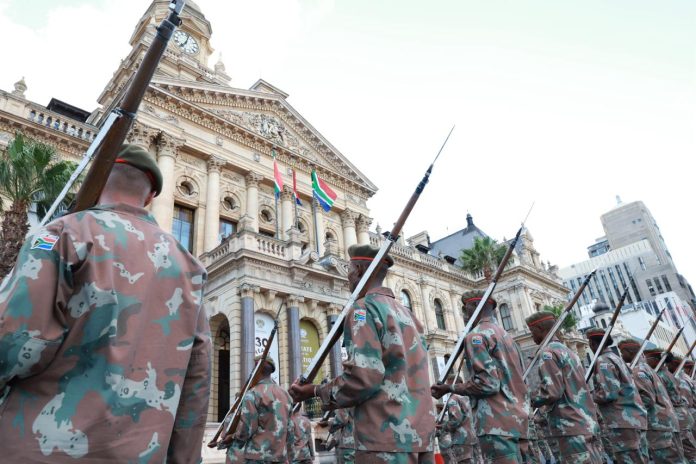
President Cyril Ramaphosa has announced the deployment of the South African National Defence Force to support police in combating gang violence in the Western Cape and illegal mining in Gauteng, as government moves to intensify its fight against organised crime and corruption.
Delivering his 2026 State of the Nation Address, Ramaphosa described organised crime as the most immediate threat to South Africa’s democracy. He outlined a renewed strategy focused on strengthening intelligence coordination, targeting priority syndicates and deploying specialised multidisciplinary teams to dismantle criminal networks.
The president said security cluster ministers have been instructed to urgently develop a technical deployment plan for the SANDF in affected areas. Parliament will be briefed on the details of the operation and the associated costs.
Beyond the military support, government plans to implement an integrated national strategy aimed at addressing both the symptoms and root causes of crime. Measures include tightening firearm legislation, strengthening enforcement of existing gun laws and improving coordination across law enforcement agencies.
Ramaphosa also committed to bolstering police capacity, announcing the recruitment of 5,500 additional officers. This is in addition to the 20,000 recruits previously announced in earlier addresses.
In response to the growing threat posed by illicit trade, the president revealed plans to establish a National Illicit Economy Disruption Programme. The initiative will bring together state agencies and private sector partners to combat the influx of illegal and counterfeit goods, particularly in high risk sectors such as tobacco, fuel and alcohol. Authorities will rely more heavily on data analytics and artificial intelligence to detect and disrupt criminal operations.
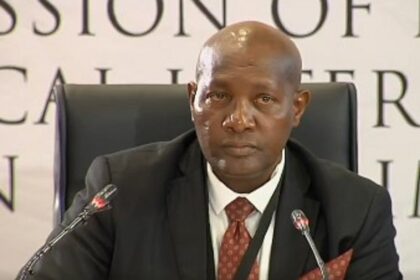
Addressing concerns about corruption within law enforcement, Ramaphosa said findings from the Madlanga Commission of Inquiry and Parliament’s Ad Hoc Committee had exposed serious misconduct within the South African Police Service and metro police departments. A newly appointed task team will fast track investigations arising from the commission’s findings, while the State Security Agency will conduct renewed vetting of senior SAPS and metro police officials. The process will include lifestyle audits and is expected to inform broader reforms within the criminal justice system.
Despite outlining tougher measures, Ramaphosa expressed confidence in the majority of police officers, describing them as committed to serving the public and upholding the law.
In the broader address, the president urged South Africans to draw strength from constitutional values, saying the country was in a stronger position than a year ago. He pointed to four consecutive quarters of economic growth, improvements in port and freight rail performance and the stabilisation of the energy sector following the end of load shedding.

He also highlighted progress in rebuilding institutions weakened by state capture, noting improvements at the South African Revenue Service and ongoing prosecutions by the Investigating Directorate.
However, Ramaphosa cautioned against complacency. He acknowledged that unemployment remains high, violent crime continues to worry communities and many municipalities are struggling to deliver basic services. While progress has been made, he said the country remains far from achieving its developmental goals.
The president concluded by reaffirming government’s constitutional obligation to create a society in which all citizens have a fair opportunity to improve their lives, even as significant social and economic challenges persist.











Facebook Comments