


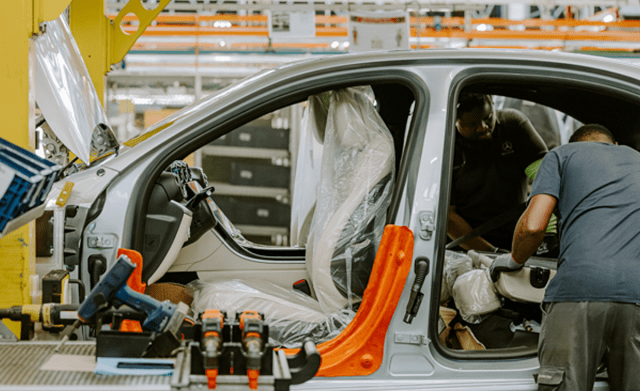
PORT ELIZABETH — The traditional dominance of German luxury automotive brands in South Africa is facing an unprecedented collapse as consumers pivot toward affordable Asian alternatives. Over the last decade, sales of premium German marques have plummeted by 68 percent, signaling a structural shift in the national car market that has forced industry giants like Volkswagen to aggressively pivot back to the entry level segment.
According to data tracking the period between 2014 and 2024, the decline for high end German manufacturers has been catastrophic. Mercedes-Benz, once the aspirational gold standard for South African motorists, saw sales nosedive by 82 percent, falling from nearly 29,000 units to just over 5,000. Audi and BMW have faced similar retreats, with sales dropping by 70 percent and 50 percent respectively. This exodus from luxury has been met by a 1,000 percent surge in the popularity of brands such as Suzuki, Chery, and Haval, which now dominate the sub-R350,000 price bracket.
In a direct response to this “new normal,” Volkswagen Commercial Vehicles has announced the relaunch of the Vivo Xpress, an urban delivery van based on South Africa’s best-selling passenger car. The move marks a strategic return to the utility market after the nameplate was discontinued in 2016. By re-entering this space, the German automaker is attempting to recapture a market that is increasingly prioritizing practical, low-cost solutions over brand prestige.
The Vivo Xpress is the only locally manufactured model in the A0 City Van segment, produced at the Kariega plant in the Eastern Cape. Volkswagen Group Africa has partnered with SA Van Conversions to turn the Polo Vivo into a functional delivery vehicle with a payload of 490 kg. This local value chain is designed to streamline production and offer a price point that appeals to the “price sensitive” consumer identified by the National Automobile Dealers Association (NADA).
This shift raises critical questions regarding the long-term strategy of German brands. For years, these companies focused on high margin luxury vehicles, potentially leaving a vacuum that Asian manufacturers were happy to fill. The sudden re-introduction of affordable options suggest that while the engineering capacity for budget friendly vehicles always existed, the brands were comfortable maintaining a premium status until economic headwinds, including high inflation and fuel costs, forced their hand.
The crisis is not limited to South Africa. Globally, German automakers are struggling with a late transition to electric mobility and trade tensions in major markets like the United States and China. In the first half of 2025, Mercedes-Benz reported a 56 percent drop in profits, while Porsche saw an operating profit plunge of 91 percent. These figures suggest that the “Made in Germany” label is no longer enough to guarantee market share in a world where value for money has become the primary driver of consumer behavior.
For the South African market, the success of the Vivo Xpress will be a litmus test for whether German engineering can successfully compete with the aggressive pricing of Chinese and Japanese brands. As e-commerce and courier services continue to expand, the demand for Light Duty Vehicles is expected to grow, but the era of the high-priced luxury sedan as a dominant market force appears to be reaching its end.
Anyone with additional information relating to this story can contact us through email press@townpress.co.za.










Facebook Comments