


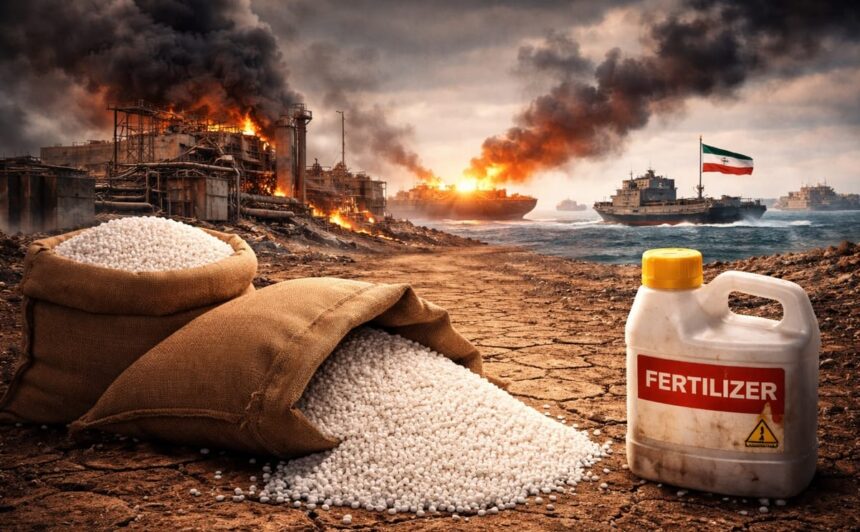
Disruptions to fertiliser supplies caused by the ongoing Middle East conflict are posing a serious threat to global food security, with concerns over both reduced supply and rising prices.
The warning comes as Iran has effectively shut down the Strait of Hormuz, a critical shipping route through which a significant portion of the world’s oil, gas and fertilisers normally pass. Around a third of global fertiliser shipments move through the strait, making the disruption particularly significant.
World Trade Organization Deputy Director-General Jean-Marie Paugam has cautioned that fertilisers are currently the most pressing concern, as any interruption in supply could have lasting consequences for global agriculture.
A shortage of fertilisers would not only reduce crop yields but also drive up food prices, with the impact likely to worsen over time. Lower production in one season often leads to further shortages and price increases in the next.
The Gulf region plays a central role in fertiliser production due to its abundant natural gas resources, a key component in manufacturing products such as urea. However, the conflict has disrupted production, with some facilities forced to shut down.
Major agricultural economies, including India, Thailand and Brazil, rely heavily on fertiliser imports from the Gulf, leaving them vulnerable to ongoing supply disruptions.
Although there is no immediate shortage, experts warn that the situation could deteriorate quickly if the blockade persists. A prolonged closure of the Strait of Hormuz, particularly over several months, could significantly affect fertiliser availability just as planting seasons begin for next year’s crops.
Net food importing regions, especially in parts of West and North Africa, are expected to be among the hardest hit. The risk could be further intensified if countries begin stockpiling supplies, a pattern seen during global trade disruptions at the height of the Covid 19 pandemic.
While progress had been made towards reducing global hunger, the current crisis threatens to reverse those gains. Experts warn that continued instability could derail efforts to meet international food security targets in the coming years.












Facebook Comments