


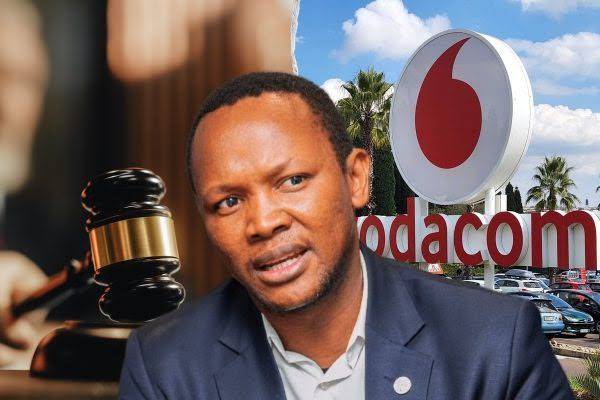
Nkosana Makate’s nearly 20-year legal fight for compensation over the Please Call Me invention continues, following a Constitutional Court ruling that the case must be reconsidered by the Supreme Court of Appeal.
The latest decision comes after the apex court found that the appeal court had failed to fully assess the issues raised during Vodacom’s challenge to a previous High Court ruling.
That ruling had directed Vodacom to pay Makate between five and seven point five percent of the revenue generated from the service over 18 years.
Makate, who remains committed to securing what he believes is just compensation, welcomed the court’s decision.
He has long argued that Vodacom unfairly benefited from his idea and that he is entitled to at least ten billion rand. Vodacom, however, has maintained that a fair payment would be closer to fifty million rand.
Delivering the unanimous judgment, Acting Deputy Chief Justice Mbuyiseli Madlanga stated that while the Constitutional Court normally deals only with constitutional matters, it reviewed aspects of the case to illustrate the appeal court’s failure to properly evaluate the facts.
He explained that the Supreme Court of Appeal had not adequately engaged with the evidence before it and had overlooked key issues.
As a result, the Constitutional Court ordered that the case return to the Supreme Court of Appeal to be heard by a new panel of judges.
The legal dispute stems from a 2016 Constitutional Court ruling, which found that Vodacom was bound by an agreement with Makate and instructed the company to negotiate reasonable compensation in good faith.
Vodacom’s CEO subsequently determined a payment of forty-seven million rand. Dissatisfied with this amount, Makate challenged the decision in the High Court.
The High Court ruled in his favour and ordered the compensation be recalculated according to specific guidelines.
Makate then proposed a figure of twenty billion rand, based on a formula involving call rates, usage, and conversion metrics. Vodacom responded with an offer of ten million rand. These negotiations failed to produce a resolution.
Vodacom appealed the High Court’s decision to the Supreme Court of Appeal, which ultimately upheld Makate’s claim and confirmed the five to seven point five percent revenue share.
The company then approached the Constitutional Court, arguing that the appeal court had failed to address crucial elements of the case.
The Constitutional Court agreed, stating that the appeal court did not sufficiently consider whether the original offer of forty-seven million rand was reasonable.
It also noted that the court had summarised arguments without properly analysing the underlying evidence.
Although the legal battle is set to continue, Makate remains hopeful that the new hearing will result in an outcome that reflects the value of his contribution to Vodacom’s success.










Facebook Comments