


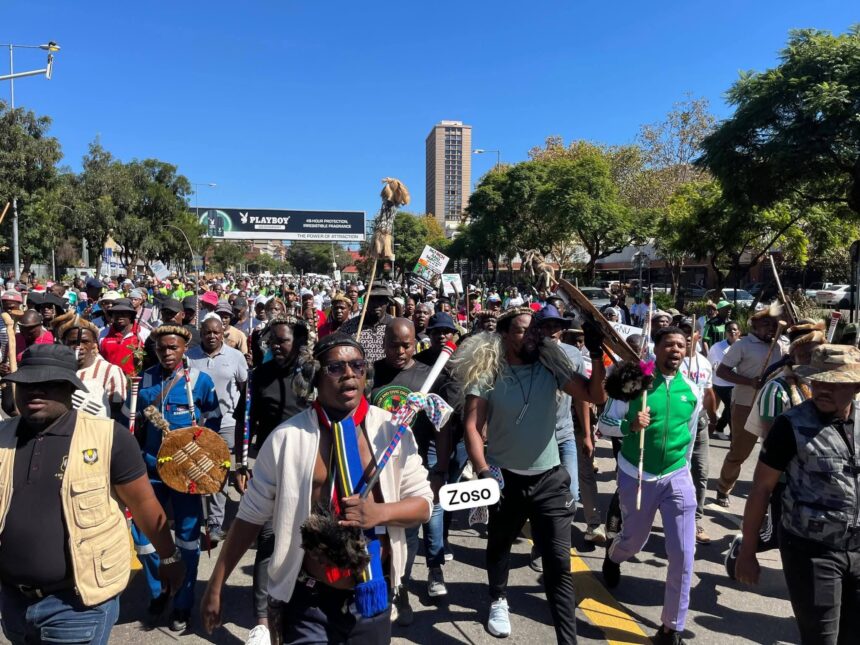
Yesterday’s nationwide anti-immigration marches will undoubtedly dominate political debate for weeks to come. Images of thousands of demonstrators marching through the streets of Johannesburg, Durban, Pretoria, Pietermaritzburg, Tembisa and Cape Town circulated across television broadcasts and social media, alongside reports of isolated violence, looting, damage to businesses, forced entry into homes and other criminal acts currently under investigation by authorities.
The immediate focus has understandably been on the demonstrations themselves, the rhetoric surrounding migration, and the incidents of violence that accompanied parts of the day.
Yet there is a more uncomfortable question that South Africa should be asking today. The most alarming statistic from yesterday was not the number of people who marched. It was when they marched. These demonstrations took place on an ordinary working Tuesday. Not on a public holiday. Not over a weekend. Not during a national shutdown.
On a normal business day, thousands of South Africans across multiple provinces were able to leave their homes and spend hours participating in demonstrations. Whether one agrees with the purpose of the marches or not, that reality should force policymakers to confront an uncomfortable truth: South Africa’s unemployment crisis is no longer something reflected only in quarterly reports from Statistics South Africa. It is now visible on the country’s streets.
Only months ago, Statistics South Africa reported an official unemployment rate of 32.7%, representing more than eight million unemployed South Africans, while youth unemployment remained among the highest in the world. Those figures have often been discussed as percentages in policy briefings and parliamentary debates. Yesterday, those statistics appeared in human form. The sheer number of people available to participate in coordinated demonstrations during working hours should concern government far more than the march itself.
A healthy economy rarely produces weekday protests of this scale because most citizens are at work, in classrooms, operating businesses or participating in productive economic activity. When significant numbers can mobilise across numerous cities on a working day, it reflects an underlying labour market under immense strain.
This observation should not be interpreted as criticism of every individual who participated. South Africans have a constitutional right to peaceful protest, and many citizens have legitimate concerns about crime, border management, service delivery and economic opportunities.
However, the events of yesterday also demonstrated how economic frustration can be channelled toward visible targets instead of addressing deeper structural problems. Immigration has become the rallying point. Unemployment remains the underlying crisis.
The reports emerging throughout the day also illustrate the dangers of allowing economic frustration to evolve into lawlessness. While authorities described the principal marches as largely peaceful, credible reports documented incidents including looting of foreign-owned businesses, damage to private property, intimidation of residents, a vehicle set alight in Johannesburg, and the displacement of migrant families in some communities. These incidents should be condemned unequivocally, regardless of who the victims are. Criminality cannot become an acceptable extension of political protest.
Equally important is resisting the temptation to conclude that removing migrants will resolve South Africa’s employment crisis.
The country’s unemployment challenge predates the current migration debate by decades. Slow economic growth, declining business confidence, skills mismatches, corruption, energy instability, weak investment and limited job creation have collectively produced one of the highest unemployment rates in the world. These structural challenges cannot be solved through immigration enforcement alone.
Government therefore faces two separate responsibilities. The first is to maintain effective, lawful border management and ensure immigration laws are fairly and consistently enforced. The second—and arguably more urgent—is to create an economy capable of absorbing millions of unemployed South Africans into meaningful work. Yesterday’s marches should therefore not be viewed only through the lens of immigration politics. They should be recognised as a national warning signal.
If thousands of South Africans can leave their homes on a weekday to march because they have nowhere else they are required to be, then the country is confronting a labour market emergency that deserves the same level of urgency as any security operation.
South Africa does not merely have an immigration debate. It has an employment crisis.
Anyone with additional information relating to this story can contact us through email press@townpress.co.za.












Facebook Comments