


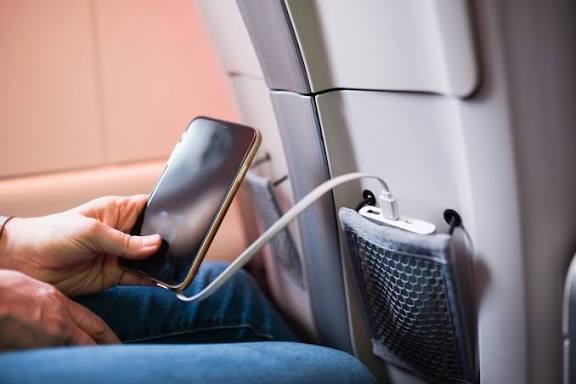
Airline passengers may soon need to rethink how they keep their devices charged in flight, as more international carriers move to restrict the use of power banks on board. The changes affect some airlines operating in and out of South Africa, raising new concerns for frequent flyers.
Carriers such as Emirates, Singapore Airlines, Eva Air and Thai Airways have recently introduced stricter rules for carrying and using portable chargers. While travellers may still bring a power bank in their cabin baggage if it meets specific safety limits, they will not be allowed to use it during the flight. This means no charging of personal devices and no recharging of the power bank itself using onboard power outlets.
Another common requirement is that power banks must be placed in hand luggage, never in checked baggage, and often in visible and accessible spots such as a seat pocket or under the seat in front. Storing them in overhead bins is discouraged.
The tougher approach is driven by safety concerns. Lithium ion batteries can overheat, become damaged or, in rare cases, catch fire. When devices are packed out of sight, it becomes harder for crew to detect or respond to an incident. The United States Federal Aviation Administration recently repeated its warnings on the issue after recording 50 incidents involving power banks on planes.
From 1 October 2025, Emirates will enforce its new rules on flights serving South Africa. Passengers may still bring power banks under 100 watt hours in their carry on baggage, but they will not be permitted to use them during the flight or recharge them using the aircraft’s power supply.
South African carriers have adopted slightly different approaches. FlySafair follows the International Air Transport Association’s Dangerous Goods Rules, which allow power banks up to 100 watt hours in cabin baggage but prohibit them in checked luggage. South African Airways, Airlink and Lift also allow spare batteries under certain limits, although larger power banks between 100 and 160 watt hours may require prior airline approval.
For travellers, these changes mean a shift in how they keep devices powered during long journeys. While most airlines continue to offer in seat charging points, the option of relying on personal power banks is becoming increasingly restricted.














Facebook Comments