
Trump Halts Tariffs on Mexico and Canada but Maintains Trade Pressure on China


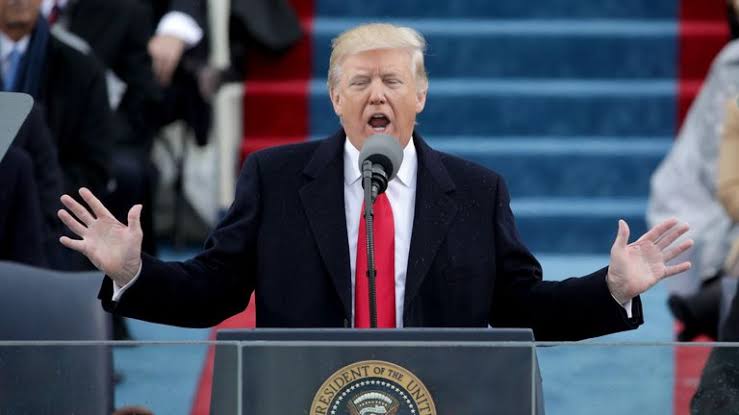
US President Donald Trump announced on Monday a one-month delay on imposing tariffs on Mexico and Canada, while keeping China in the spotlight for additional trade levies that have unsettled the global economy.

In last-minute negotiations, Mexican President Claudia Sheinbaum and Canadian Prime Minister Justin Trudeau reached agreements with Trump to strengthen border controls, particularly to curb the flow of migrants and the drug fentanyl into the United States.
Trump’s initial threat of a sweeping 25% tariff on exports from Canada and Mexico had sent global stock markets tumbling, fueling fears of an escalating trade war. However, following what he described as “very friendly” discussions with Sheinbaum, Trump agreed to “immediately pause” the tariffs on Mexico. As part of the agreement, Mexico committed to deploying 10,000 troops along its border with the US.
Tensions were more pronounced between the US and Canada. Despite this, after two phone conversations with Trudeau, Trump announced on Truth Social that Canada had pledged to strengthen border security and take action against fentanyl trafficking.
Trudeau confirmed that Canada would deploy nearly 10,000 frontline officers to bolster border security, designate drug cartels as terrorist organisations, appoint a “Fentanyl Czar,” and tighten regulations on money laundering. However, it was unclear how significant these changes were, given that Canadian authorities had already stationed 8,500 personnel at the border as of December.
Stock Markets React as China Faces Additional Tariffs
While Mexico and Canada secured temporary relief, China remains subject to a further 10% tariff increase on top of existing levies. The White House stated that last-minute negotiations with Beijing were underway in an attempt to reach a resolution.
Karoline Leavitt, Trump’s spokeswoman, told reports that “there is a plan for him to talk to President Xi in the next 24 hours.”
China, along with Canada and Mexico, is among the US’s top three trading partners. Wall Street’s major indices initially dropped sharply in response to the tariff threats but rebounded slightly after the Mexico deal was announced. Meanwhile, European markets in London, Paris, and Frankfurt closed in negative territory.
The White House emphasised the significance of the weekend negotiations. “This is not a trade war; this is a drug war,” said National Economic Council Director Kevin Hassett, criticising Canada for what he described as a misunderstanding of US demands. However, US government data indicates that only a minimal amount of drugs enter the country via the Canadian border.
Canada’s Retaliation and Political Fallout
In response to Trump’s tariff threats, Canada had vowed strong countermeasures. Citizens have protested by booing the US national anthem at sporting events, canceling trips to the US, and boycotting American products.
Ontario, the country’s most populous province, retaliated by banning US companies from bidding on government contracts worth billions of dollars. Additionally, it scrapped a deal with Elon Musk’s Starlink, a company aligned with Trump.
Trump has intensified pressure on Canada by questioning its sovereignty, once again suggesting that it should become the 51st US state.
His tariff threats have also triggered political turmoil in Canada, prompting Trudeau to announce his resignation earlier this month. As a result, Canadians may face early elections as soon as April.
Mexico Under Pressure as Trump Doubles Down on Tariffs
Mexico has been under mounting pressure to strengthen border security as Trump vows to crack down on undocumented migration.
Having previously described “tariff” as “the most beautiful word in the dictionary,” Trump is pushing for even more aggressive trade policies in his second term than in his first.
He insists that the costs will be absorbed by foreign exporters without affecting American consumers, despite widespread expert analysis suggesting otherwise.
Returning from a weekend at his Florida resort, the 78-year-old billionaire acknowledged that Americans might experience some economic “pain” due to his tariff policies, but he remains firm in his approach.