


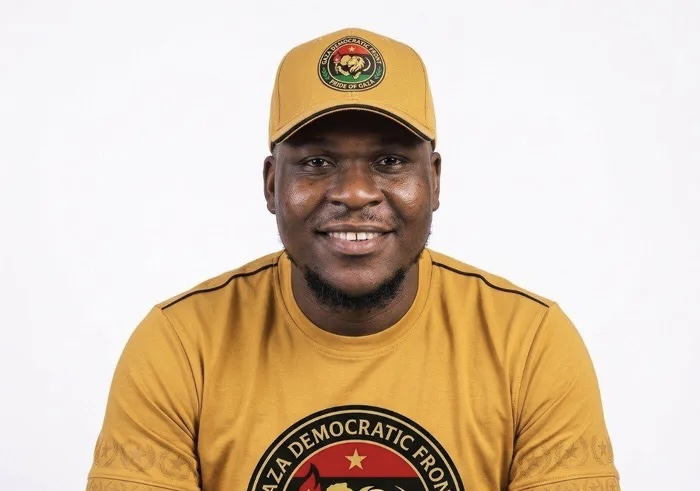
A new political movement is steadily gaining visibility across Limpopo, with the Gaza Democratic Front (GDF) positioning itself as a party focused on practical service delivery and community-centred governance.
From Giyani and Polokwane to the rural communities of Molemole and the mining regions of Lephalale, the party is building support around issues many residents say have long been neglected, including water access, land, food security, jobs, and reliable municipal services.
Leading the movement is Reason Mthombeni, a relatively unknown political figure outside local structures, who says the party’s focus is rooted in restoring dignity through functional governance.
Speaking in an interview this week, Mthombeni said communities had become too accustomed to broken systems and poor service delivery. He argued that the role of government should be to provide consistent basic services and improve people’s everyday lives.
The GDF has already established a footprint across several municipalities in Limpopo, including areas within Capricorn, Mopani, Sekhukhune, Vhembe, and Waterberg districts. Municipalities such as Blouberg, Lepelle-Nkumpi, Greater Giyani, Fetakgomo Tubatse, and Musina have become key targets for the party’s campaign efforts.
According to Mthombeni, the strategy is to build support from the ground up by focusing on local government, where residents experience the direct impact of failing infrastructure, unemployment, and poor municipal management.
Rather than relying on broad political rhetoric, the party’s messaging centres on issues affecting daily life in many communities. In areas still dependent on water tankers, promises of reliable services resonate strongly, while calls for land access continue to speak to long-standing frustrations around ownership and economic exclusion.
Campaign material released by the GDF focuses heavily on themes of dignity, food security, justice, and support for vulnerable communities. While these issues are not new in South African politics, the party is attempting to connect them directly to local municipal realities.
Mthombeni says the movement aims to challenge what he describes as a growing acceptance of poor governance and low expectations from political leaders. He added that the party is bringing together community members and business stakeholders who want to contribute to improving living conditions in the areas where the GDF operates.
Although Limpopo remains its main base, the movement is also expanding into Mpumalanga, targeting municipalities in districts such as Ehlanzeni, Gert Sibande, and Nkangala. Areas including Bushbuckridge, Nkomazi, Emalahleni, and Steve Tshwete are part of the party’s broader push to grow beyond provincial borders.
In Gauteng, the party’s campaign shifts focus toward governance, efficiency, and economic opportunity in metros including Johannesburg, Tshwane, and Ekurhuleni, as well as regions such as Sedibeng and the West Rand.
The GDF’s emergence comes at a time when many voters, particularly younger South Africans, are increasingly frustrated with established political structures and poor municipal performance. Conversations in communities often centre less on ideology and more on functioning infrastructure, accountability, and service delivery.
Mthombeni believes that frustration creates an opportunity for new political alternatives that can demonstrate competence and consistency at local government level.
However, the party faces significant challenges in an already crowded political environment. The Electoral Commission recently confirmed that 508 political parties are registered to contest the 2026 Local Government Elections, including dozens of newly formed organisations.
Political analysts have repeatedly noted that newer parties often struggle with organisation, funding, and translating public visibility into electoral support. Voters are also placing greater scrutiny on whether parties can move beyond broad promises and provide realistic policy solutions.
Still, in communities such as Giyani and Malamulele, where the movement first began building support, the GDF appears determined to establish itself as a grassroots alternative focused on rebuilding trust between communities and government.
For now, the party’s growth remains gradual, with community meetings and organisational structures still developing. But its leaders believe the movement’s long-term success will depend on convincing voters that local government can once again deliver visible improvements in people’s lives.











Facebook Comments