
India’s Gen Z ‘Cockroaches’ are back. This time about elections


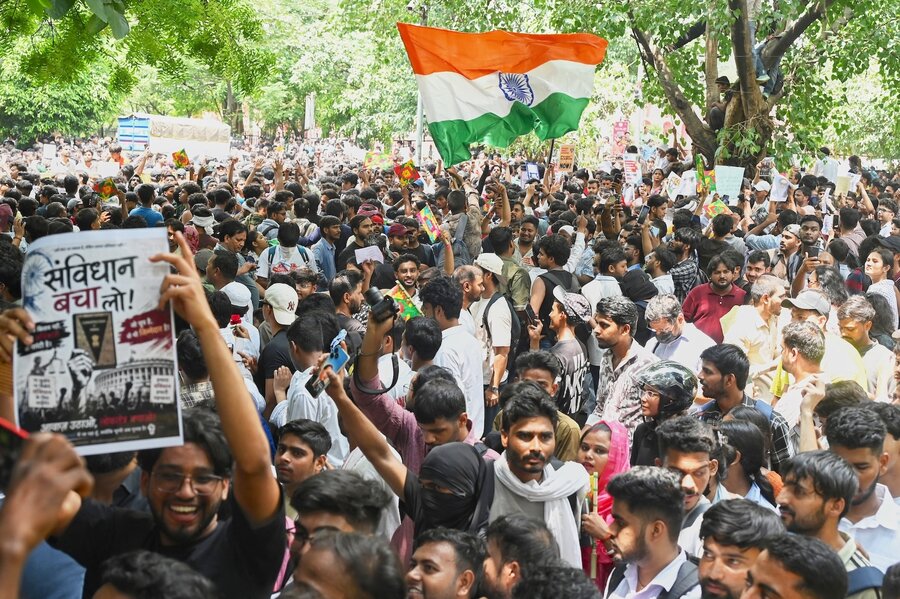
NEW DELHI — India’s youth-led “Cockroach” movement, which helped force the country’s education minister from office earlier this year, has returned to the streets with a considerably bigger target: the official responsible for overseeing elections in the world’s largest democracy.

Hundreds of protesters were detained in New Delhi on Friday as demonstrations demanded the resignation of Chief Election Commissioner Gyanesh Kumar over controversial revisions to India’s voter rolls. Separate demonstrations went ahead in Mumbai, where the Cockroach Janta Party launched what it says will become a wider national campaign.
The protests mark a significant shift for a movement that began with young Indians angry about leaked examination papers and unemployment but has increasingly expanded into questions about government accountability and electoral integrity.
In New Delhi, police imposed restrictions around Jantar Mantar, a traditional protest site, erected barricades and deployed additional personnel. More than 500 people were detained as protesters attempted to gather, according to reports from the Indian capital.
Those detained included former Delhi Chief Minister Atishi, Aam Aadmi Party Delhi president Saurabh Bharadwaj, activist Yogendra Yadav and student leaders.
Police subsequently registered three cases relating to the demonstrations, citing alleged violations including disobeying public officials, obstruction and the use of criminal force against public servants. Mumbai presented a different picture.
Cockroach Janta Party supporters were able to gather at Shivaji Park, where prominent figures including actors Naseeruddin Shah and Shabana Azmi, singer Vishal Dadlani and Mahatma Gandhi’s great-grandson Tushar Gandhi joined demonstrators demanding Kumar’s resignation.
At the centre of the dispute is India’s Special Intensive Revision of electoral rolls.
Critics of the process allege that documentation requirements and voter-list revisions risk removing eligible citizens from the electoral roll and could disproportionately benefit Prime Minister Narendra Modi’s Bharatiya Janata Party. The Election Commission and government reject allegations of manipulation, maintaining that revisions are intended to identify duplicate, deceased and otherwise ineligible registrations.
Those competing claims are politically significant because India administers elections on a scale unmatched anywhere else in the world.
Concerns surrounding the process have intensified following reporting that two other election commissioners raised objections to some decisions connected to the voter-roll revision. The Cockroach movement has seized on those reports in demanding Kumar’s departure.
The Election Commission has meanwhile taken steps to add newly eligible and previously omitted voters to the rolls. The movement’s unusual name comes from an insult its supporters turned into an identity.
Young protesters began calling themselves “cockroaches” after India’s chief justice used the term during proceedings connected to student protests. What started partly as online satire subsequently developed into a national youth movement capable of bringing thousands of people onto the streets.
Its first major confrontation with Modi’s government centred on examination scandals.
Anger over leaked papers, education and employment opportunities grew into demonstrations demanding the resignation of Education Minister Dharmendra Pradhan. More than 10,000 people attempted to march towards Parliament in July, with police using tear gas and batons during confrontations in which protesters reported scores of injuries.
Pradhan subsequently resigned, giving the movement its most significant political victory and demonstrating that a protest campaign initially dismissed by some because of its unusual name had developed considerable mobilisation capacity. The new campaign is different.
Removing an education minister following a scandal is one thing. Forcing the resignation of the country’s chief election commissioner would take the Cockroach movement directly into a dispute over the institutions responsible for India’s democratic process.
The movement is also no longer acting alone. Opposition parties, student organisations and civil society groups are raising their own objections to the voter-roll process, although their participation and political interests are distinct from those of the youth-led CJP.
CJP national convener Abhijeet Dipke has indicated the demonstrations will not end with Mumbai and Delhi. The movement has threatened a sustained campaign and protests in additional Indian cities if Kumar does not resign.
Whether that pressure produces another resignation remains uncertain. The Election Commission denies wrongdoing, and the allegations surrounding the voter revisions remain contested.
What is already clearer is that India’s “cockroaches” survived their first confrontation with the government, helped force one minister from office and have returned with a cause considerably more consequential than the one that created them.
This time, they are fighting over who gets onto the voter list before India votes again.
Anyone with additional information can contact the press desk at press@townpress.co.za or drop a tip on our annonymous platform https://tips.townpress.co.za/