


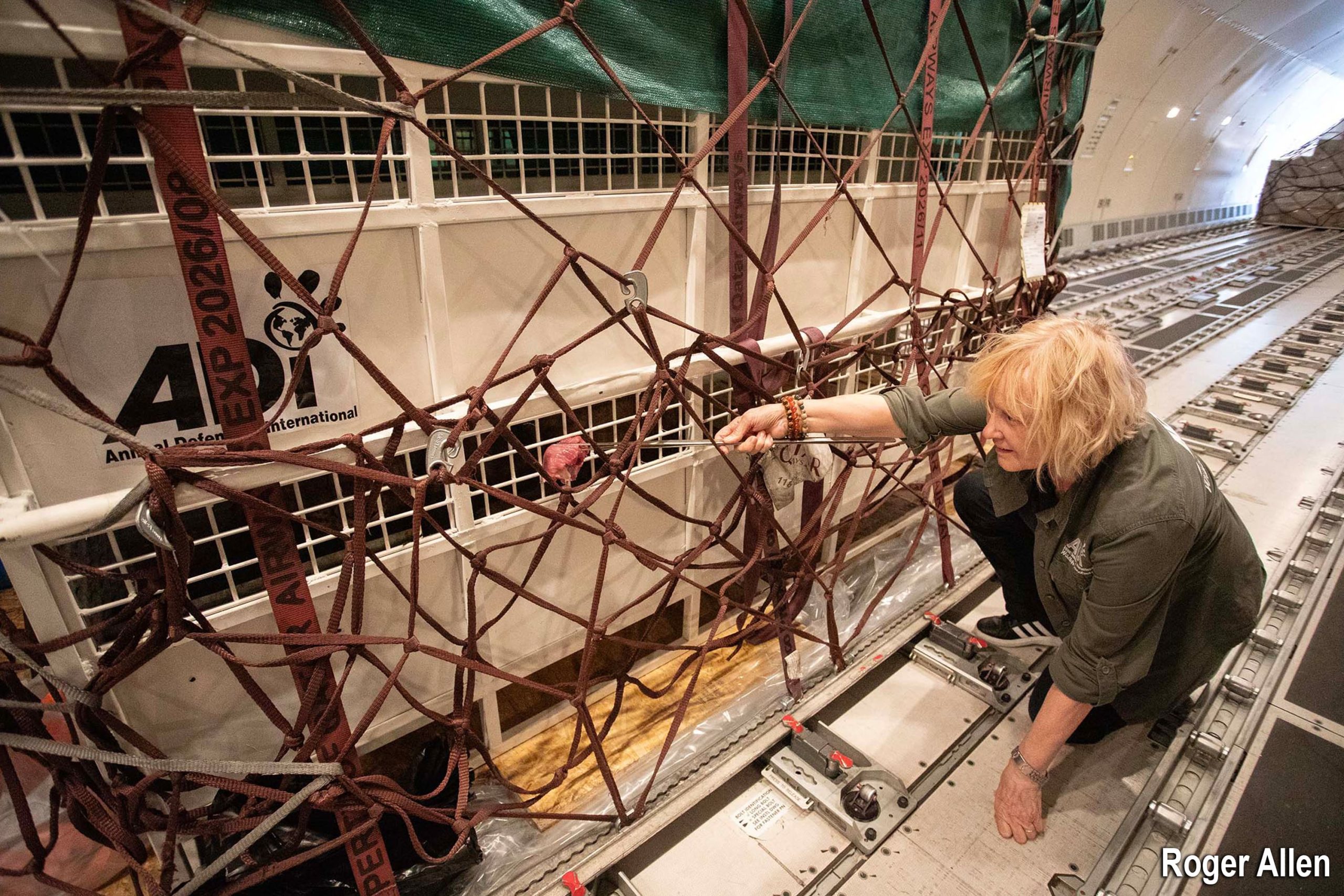
The lions—males Muheeb, Saham, Shujaa, and Saif, along with females Dhubiya and Aziza—were all recaptured after being abandoned by their owners in the streets of Kuwait City or the surrounding desert, where it is illegal to keep them as pets. The young lions were rescued by staff and volunteers at Kuwait Zoo, following guidance from authorities. Animal Defenders International (ADI) has offered them a permanent home at their 455-acre ADI Wildlife Sanctuary in South Africa.
Two young cubs, Dhubiya and Saif, were discovered abandoned in the desert, left to starve. They were nursed back to health at the zoo and are now playing and basking in the sunshine, their home in Africa. A special cargo flight was donated for the mercy mission by Qatar Airways Cargo as part of their WeQare initiative, which transported the lions from Kuwait to Qatar and then to South Africa.
Throughout the relocation process, renowned wildlife veterinarian Dr. Peter Caldwell monitored the lions, including during their sedation for loading into travel crates. During the flight, the lions were fed and watered by ADI’s Jan Creamer and Tim Phillips. The lions were initially placed in their night houses at the ADI Wildlife Sanctuary in Free State and have now been moved to quarantine enclosures, where they are playing with catnip punch bags and large balls. After two weeks in quarantine, they will be released into individual large natural enclosures of up to four acres.
Known as the young lions symbolize an illicit global trade that is being exacerbated by irresponsible social media posts showcasing individuals petting and with big cats. In this harsh industry, infants are separated from their mothers when they are still young and adorable, leaving them lonely and reliant on their captors for sustenance and care throughout their lives. These animals are frequently kept in isolation and subjected to unsuitable conditions, including being chained or confined in basements. Used as status symbols, these magnificent, intelligent, and emotional animals can live for up to 20 years.
However, they are often discarded like a fashion accessory once their owners tire of them. Many owners come to realize that as lions mature, they become powerful and expensive to feed, and their natural behaviors can pose dangers and cause destruction to humans. ADI believes that if action is not taken soon and big cat ownership continues to be promoted as trendy, the issue of lions and tigers being abandoned worldwide could escalate to epidemic proportions within a few years.
Jan Creamer, President of ADI: “The Kuwait 6 lions have their whole lives ahead of them and will have acres of space at the ADI Wildlife Sanctuary. The ADI supporters who are helping to fund their care and this rescue are giving these lions their lives back, living as close as possible to the life they lost. This is great news for these lions but also a warning about a cruel and irresponsible trade. Lions should never be kept as pets, they are wild animals. ADI is grateful to the authorities in Kuwait for action to try and halt this illegal trade, to Kuwait Zoo for providing a safe haven for the lions, to Qatar Airways Cargo for helping bring them home, and to the ADI supporters funding the care of these animals.”
Mark Drusch, Chief Officer Cargo at Qatar Airways Cargo: “We are proud to once again be supporting ADI, this time in bringing these six beautiful lions home to Africa. Our WeQare Rewild the Planet initiative is our commitment to returning wildlife and endangered species back to their natural habitat, free of charge. It takes a lot of effort and logistics for our team to organise moving such large animals, but it is something we are all collectively very proud and passionate to be a part of.”
Alzahra Aljanabi, Senior Translator, Animal Welfare Department, Public Authority of Agricultural Affairs and Fish Resources: “The Public Authority of Agriculture and Fish Resources and Kuwait Zoo would like to thank the ADI Wildlife Sanctuary for their support and efforts in providing a better habitat for the six lions from Kuwait. We are also thankful for Qatar Airways Cargo for funding the flight, Royal Animal Hospital, Bahman International Cargo, Kuwait Zoo staff and Leila (@bfgkuwait). People underestimate the risks of having wild animals as pets. They may be magnificent creatures but they are also predators. We need more awareness to combat wildlife trafficking”.
Jan Creamer added: “Seeing these lions playing as they start their new lives at the ADI Wildlife Sanctuary is magical and we are excited to see them start to explore their large habitats. It is also a reminder of how much work needs to be done to stop the suffering of others like them and to defeat the wildlife traffickers. I hope that people will join ADI as we work for that goal.”













Facebook Comments