


Even something as beautiful as Barcelona and Lionel Messi’s 21-year love affair can be broken by the cold, hard logic of debt.
Like the tragic end of a romance film, Messi did not want to leave Barcelona, and Barcelona did not want Messi to go, but alas, a force more powerful than both broke them apart.
Barcelona’s fans are looking for answers, with fingers being pointed in various directions. The club’s leadership has been accused of mismanagement; La Liga has been chastised for sticking to its regulations; Messi himself has been criticised for putting money before loyalty. So what is the real reason behind the Argentinian superstar’s heartbreaking exit?
Blame game
It has taken no time at all for the blame game to start about Messi’s messy exit from Barcelona. Certainly, there is plenty of responsibility to be dished out.
The fan-owned club has been mismanaged so badly that for every euro ($1.17) earned, it has been paying out 1.10 euros ($1.30) solely on player salaries. By definition, expenditures far outstripping revenues means the club has been relying on a growing debt burden to pay for big-name signings and their huge pay packets, with the club’s total debt having now broken through the one billion euro ($1.1bn) barrier.
Messi claims to have done everything he could to stay, and he had agreed to take a 50 percent cut in his salary. However, his previous contract was worth an astonishing 555 million euros ($652m) over four years, the highest of any sports person in history, and included 115 million euros ($135m) just for signing the deal and 78 million ($91m) as a “loyalty bonus”. After making money like that, he could have agreed to play at Barca for free for a season to help the club he loves through its troubles and still have been the most handsomely paid footballer in the world for the past half-decade.
And then there is La Liga, which runs the top two divisions of Spanish football. In 2013, it created new financial rules for clubs which set limits on what clubs can spend on their playing squad in a single season based on an analysis of their financial health. La Liga found that, after the financial impact of the pandemic, Barcelona needed to make significant cuts to player salaries to stay within the rules, a drop of 47.1 percent from 656 million euros ($770m) to 347 million euros ($407m).
Barcelona President Joan Laporta blamed the club’s failure to re-sign Messi on La Liga’s refusal to bend its rules, but Barca happily signed up to these regulations in 2013 along with the 19 other La Liga clubs. Blaming financial regulations for Barcelona’s problems is a bit like blaming a doctor for preventing you from cutting your own hand off: Barcelona’s financial crisis will not be solved by more lavish spending. A more rational line of questioning in La Liga’s direction would be to ask why the rules had not been a lot tougher to prevent the club from getting into such a mess in the first place?
Indeed, so desperate was La Liga to keep Messi in Spain that they agreed to a deal in principle last week to sell a 10 percent stake in the league to private equity firm CVC partners, in return for a cool $3bn to be shared between the 20 clubs.
Laporta said that financial boost would have provided the additional cash the club needed to re-sign Messi, but at the expense of selling a stake in the league’s financial future – most importantly, the TV broadcasting rights, a devil’s bargain he could not support.
A structural problem
Barcelona has clearly been very badly run, but take a step back from the finger-pointing and one can see that the club’s risky approach was the thin edge of a long wedge in elite football, where there are clear, rational incentives to throw caution to the wind in an industry which lavishes financial rewards on those who win big.
For Barcelona, signing the latest star players was an attempt to cement the club’s position as one of two or three at the commercial and sporting pinnacle of world football before the Messi era was over.
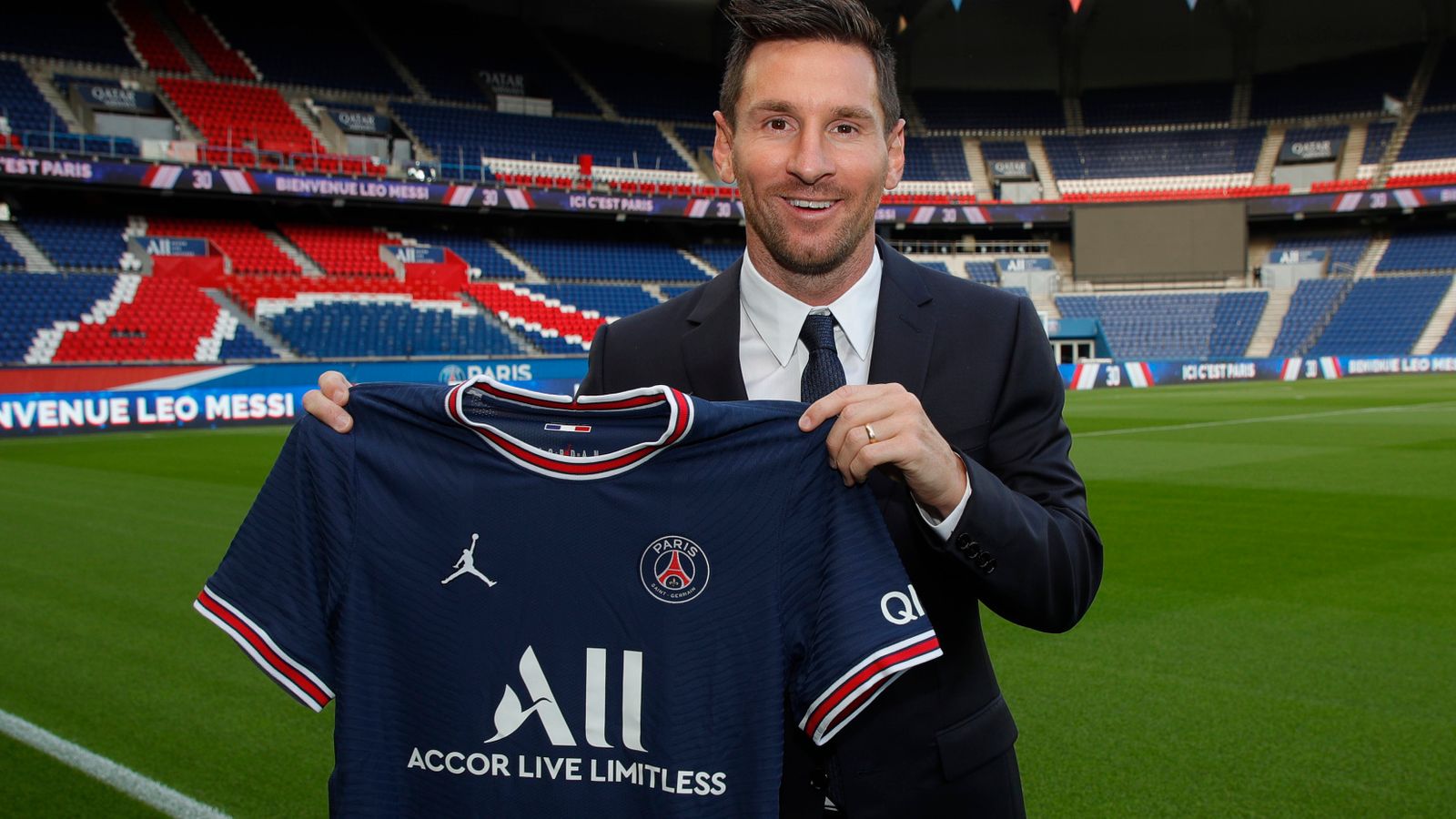
Not only was it competing with archrival Real Madrid in this respect – a club that also finds itself in major debt trouble chasing similar dreams of global domination. But it was also trying to challenge the giants of English football clubs, which receive substantially more in TV broadcasting money every year, as well as mega-rich new rival Paris St Germain, which has already lured Neymar away from the Catalan capital with Qatari cash and now appears set to bag Messi.
Clearly, the club made calamitous transfer decisions under the leadership of former President Josep Maria Bartomeu, such as spending nine-figure sums on three flops – Philippe Coutinho, Ousmane Dembélé and Antione Griezmann. But the short-term pursuit of sporting glory as a route to overcome the commercial gap with their European rivals did have a certain business sense.
That TV money disparity partly explains why Barcelona, Real Madrid and Italian giant Juventus have been the most determined to continue their pursuit of the Super League, while the six English clubs which also signed up to the breakaway competition gave up on the idea after a few days of intense fan backlash in April.
Those three clubs say they are still planning a new competition in which Europe’s elite clubs would control the purse strings themselves. Realistically, the Super League idea is now little more than a bargaining chip with their domestic leagues and UEFA, the European football governing body, in negotiations for a financial deal more favourable to them.
La Liga’s broadcasting revenues are already massively skewed towards its big two clubs, but its president, Javier Tebas, remains under intense pressure to ensure Barca and Real Madrid have ever-greater resources so that they remain globally competitive brands.
The La Liga chief was an enthusiastic advocate of this pursuit of global domination, even stating in 2014 – a year after introducing new financial restrictions – that he wanted “the best 500 players” in the world in La Liga, with an ambition to topple the English Premier League as the most commercially successful domestic competition in the world. There was little concern at that time from Spain’s football authorities about what would happen if the enormous growth in revenues could not be sustained.
A world in debt
The drama of Messi’s exit from Barcelona disguises just how normal it has become for corporations to falter, as their giant debt pile becomes too great to service. Corporate debt as a percentage of global GDP grew from 93 percent to 102 percent from 2020 to 2021. In 2008, the figure was 78 percent. The rise in corporate indebtedness is matched by government and household sector debt, in what economists call the age of “financialisation”.
Just like Barcelona, businesses all over the world are in a seemingly limitless dash for growth against rivals. Debt is the means by which that growth is propelled, in the belief that having more cash to invest now will make the business bigger and more profitable in the future. But in reality, there are always limits to growth, whether it be a deadly pandemic or mistakes in the transfer market. When those limits become apparent, the debt becomes unsustainable.
Barcelona may be a fan-owned club, but in the hyper-capitalist world of modern football, it is just another commodity in the global market, in which everything – even Messi – has a price. Is there an alternative to a football industry that knows the price of everything and the value of nothing?
The inequalities of elite football could be reined in by strict player salary caps, limits on agent fees, a more equitable distribution of broadcasting revenues for all the clubs, and a guaranteed percentage of income going towards grassroots football. That would put some dignity back into what began as a sport run by and for the working classes.
However, none of those measures would address the problem of indebtedness of big clubs like Barcelona. In fact, it would exacerbate that problem, at least in the short term, as the big clubs need big money to service their big debts. Debt is a trap that is hard to break out of.
Solving the debt problem requires much more radical thinking, such as the global debt jubilee proposed by economist Steve Keen. At some point, we will have to tell the banks – bailed out by the public purse again and again – that they are not going to get re-paid.
No one is expecting such solutions to emerge out of the world of football, but if Barcelona’s Messi tragedy can help start a debate about the dominance of debt in all aspects of our lives – including our football teams – something positive could come from this.
Ben Wray
The views expressed in this article are the author’s own and do not necessarily reflect editorial stance.










Facebook Comments