


Capetown – It is a dry white season, once again. In texture and tone, it is a different epoch from the last time that phrase was used about South Africa. But there are familiar stirrings in the air, a sense that things are rolling around again. Some of us are old enough to know the taste of sulphur on the wind.
We are yet to feel the full effects of the drought. Many of us still have enough water to meet our needs, but we may soon face the same difficulties as a substantial number of people living in South Africa who don’t have that basic human need met. The names of towns like Majakaneng and Madibeng come to mind. One recalls the people in Bertrams, just east of the Johannesburg CBD, who trade water for toilet facilities with their neighbours. Water insecurity may still feel like a possibility if you’re in a nice suburb; it’s the “new normal” for many, and may be that for more by mid-year.
Food insecurity, a nice way of covering over the horror of perpetual hunger and malnutrition – there is not enough food going around, and the nutrient requirements of the human body are not met, and these conjoined terrors are long-term features of the world this civilisation is hurtling towards – may begin to hit us during the coming winter, the dry season for the larger part of this land. Crop failure in the heart of the country, consequent to the gathering of rain clouds that do not break and deliver respite: late summer in the heart of the country.
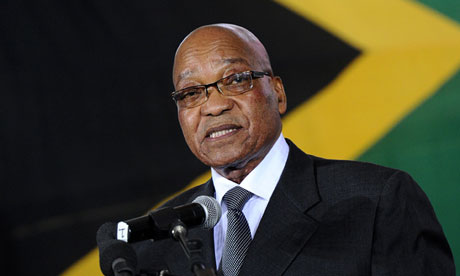
Jacob Zuma, President of the Republic of South Africa, delivered his report on his government’s achievements and shortcomings over the last 12 months, as well as their plans to tackle the challenges of the coming year. Much of what was said was hardly surprising. The same familiar phrases recurred, and the reliance on the plans from last year – which under-delivered, and that is about as generous an assessment as one can manage – despite significant new challenges not foreseen by those plans, speaks to either political stubbornness on the part of the entire government, or a lack of inspiration to come up with creative solutions. Old plans are seldom adequate for new challenges.
That the major political events of 2015 – the need by the judiciary to meet the executive to remind them how constitutionalism works; the multiple personnel changes in the finance portfolio in cabinet over a period shorter than a week; the devaluation of the currency; but most importantly, the warning of the drought and its predictable consequences – were mostly unaddressed. There ought to have been a thorough explanation to the people’s representatives in the National Assembly about the political events Zuma’s government presided over: shuffling finance ministers in a global neoliberal economic order is no small error. Having the chief justice remind the executive about the supremacy of the Constitution is no minor event on the political calendar. And those were the events the government oversaw.
A little more detail was provided on the ways in which events beyond government’s control will affect its performance in the coming year. The drought – the symbolism of the failure of rains has a long history in this part of the world – and the sinister “hidden hand of the market} featured in those caveats. But as much as those forces are real, government action and inaction must account for some of the malaise we sit with. That not a single cabinet member thought it appropriate to stand with their colleague, a finance minister who had performed well in the job and who was summarily axed, and resign out of principle, speaks volumes on the priorities of the men and women in those seats.
One was reminded of that cliché scribbled on school desks in the back rows of classrooms the world over: laugh, and the class laughs with you, but you sit in detention alone. Nene was indeed no enemy to neoliberal economic hegemony; but to hear one’s former colleagues respond with the inelegant pun that the president has the right to appoint and to disappoint, cannot have been a comfort. Nene has since resigned as an MP, and has indicated that he has yet to hear about the Brics bank appointment he was supposedly nominated for as reason for vacating his ministerial chair. That bank, of course, featured briefly in the speech; Nene’s name, or even an oblique reference to his candidacy in it … conspicuously absent.
A gesture of exasperation
The most symbolic of the interruptions that delayed the event by just over an hour was the early departure of Mosioua Lekota, leader of the Congress of the People (COPE). There are those who regularly decry Lekota for being “politically irrelevant”; this is not only an unkind reading, it is also both politically convenient and short-sighted. To walk away from a former ally on a matter of principle difference at such an occasion of state isn’t a tantrum or attention seeking-behaviour: it feels like a gesture of exasperation.

As a diagnostic exercise, SONA failed to inspire confidence in the ability of government to address the known challenges of 2016. Sticking to the old “9-point plan” meant to address the challenges of 2014-2015, and which we know did not fully address those – despite the remarks of the trade and industry minister, Rob Davies, on energy-supply stability and jobs in the automotive and clothing industries – seemed a conservative response. The most significant shift is the reduction of spending on luxuries – gala dinners, travel abroad by delegations – and consideration of the consolidation of government in one capital – a long-term vision.
The chance of bold statements or courageous plans to address the new challenges in a SONA speech in a year of local government elections was always slim. But given the week in which Zuma’s legal representation capitulated so spectacularly before the justices of the highest court in the land, one would have hoped he would go for broke. If ever there was a time for deep introspection as called for by Chief Justice Mogoeng Mogoeng, the SONA 2016 felt like it.
Alas, at the end of the evening, as several MPs chanted and sang in front of the National Assembly, and others boarded luxury German vehicles, it was not so much “austerity” and “curtailed spending” that came to mind, but a sense of deflation. SONA went off with less than a bang, and what was not quite a whimper. These are not the best of times, and many are haunted in their sleep by dreams of lean cows.








Facebook Comments