Ramaphosa Faces Opposition as Court Hears Bid to Halt Phala Phala Impeachment Inquiry


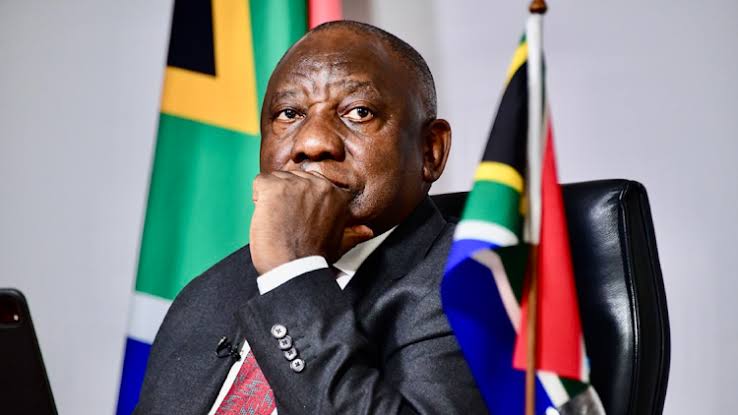
President Cyril Ramaphosa’s attempt to stop Parliament’s Phala Phala impeachment inquiry faced strong opposition in the Western Cape High Court on Wednesday, with four political parties challenging the application and judges raising questions about the legal basis of his case.

Ramaphosa is seeking an interim order to prevent Parliament’s impeachment committee from proceeding with its public inquiry until the court has ruled on his application to review and set aside the independent panel report that triggered the process. That review is scheduled to be heard from 2 to 4 September.
The matter is being heard before a full bench comprising Judges André le Grange, Matthew Francis and Diane Davis.
The application is opposed by impeachment committee chairperson Makashule Gana, the African Transformation Movement (ATM), the Economic Freedom Fighters (EFF) and the MK Party. National Assembly Speaker Thoko Didiza has indicated that she will abide by the court’s decision.
Representing Ramaphosa, Advocate Wim Trengove SC argued that the independent panel chaired by former Chief Justice Sandile Ngcobo applied the wrong legal test when it concluded there was a case for the president to answer.
He maintained that Ramaphosa was not attempting to avoid accountability but was seeking a temporary pause while the court determined the lawfulness of the panel’s findings.
During proceedings, the bench questioned whether Ramaphosa’s challenge relied too heavily on his own version of events. Judge Le Grange suggested the president appeared to believe his explanation should carry greater weight than the evidence presented against him.
Trengove responded that the panel should have properly considered Ramaphosa’s evidence before recommending a public impeachment inquiry.
Counsel for Gana, Advocate William Mokhare SC, argued that the Constitutional Court had already directed Parliament to proceed with the impeachment process and that it could not simply be halted midway.
However, members of the bench noted that the Constitutional Court’s judgment also stated that the panel’s report would remain effective unless it was set aside on review, which is the relief Ramaphosa is currently pursuing.
Representing the ATM, Advocate Anton Katz SC argued that Ramaphosa’s court papers did not directly challenge Parliament’s decision to continue with the inquiry while the review application was pending.
The EFF’s Advocate Mfesane Ka-Siboto submitted that the president’s primary concern was not reputational harm but the possibility of impeachment. He argued that the panel’s report had been public for several years without being challenged by Ramaphosa.
MK Party advocate Dali Mpofu SC mounted the strongest opposition, arguing that the president was attempting to avoid being held accountable by Parliament. He submitted that Parliament remained the constitutional mechanism through which South Africans could hold the president accountable over the Phala Phala matter.
Outside court, MK Party deputy president John Hlophe also criticised the application, saying Ramaphosa was wasting the court’s time because the Constitutional Court had already directed that the impeachment process proceed.
The Phala Phala controversy stems from the theft of foreign currency from Ramaphosa’s Limpopo game farm in February 2020. The incident only became public in 2022 after former State Security Agency director-general Arthur Fraser laid criminal charges, alleging that the theft had been concealed.
Ramaphosa has denied any wrongdoing, maintaining that the money came from the sale of buffaloes and that he reported the theft to the head of his presidential protection unit.
In November 2022, the independent panel found prima facie evidence that Ramaphosa may have committed serious violations of the Constitution and the law. Although the ANC-dominated National Assembly voted against establishing an impeachment inquiry at the time, the Constitutional Court later ruled that decision irrational and unconstitutional, ordering Parliament to establish a multiparty impeachment committee.
The committee, chaired by Rise Mzansi’s Makashule Gana, could ultimately recommend an impeachment vote in the National Assembly, where a two-thirds majority would be required to remove the president from office.
The hearing is expected to continue on Thursday, when Trengove will deliver Ramaphosa’s reply to the arguments raised by the respondents.