


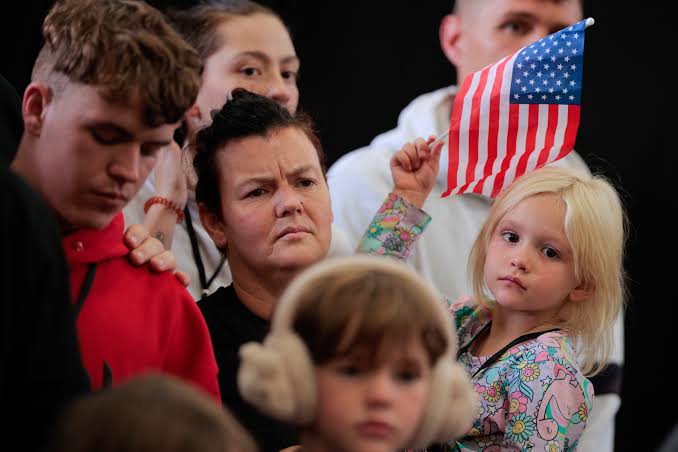
A group of Afrikaners who relocated to the United States after being granted asylum on the basis of alleged discrimination and violence in South Africa are reportedly facing significant challenges with the country’s resettlement programme.
The group arrived in the US in May 2025 and were welcomed at Dulles Airport outside Washington by Deputy Secretary of State Christopher Landau and Homeland Security Deputy Secretary Troy Edgar. At the time, US officials assured the families that they would receive support to help them rebuild their lives.
Through resettlement agencies, the families were promised assistance with housing, job placement and school enrolment. However, recent reports suggest that some have struggled to access the support they were told would be available.
Madeleine Rowley, a journalist with The Free Press, told CBS News that several families are battling to make ends meet, citing what they describe as shortcomings within the US government system.
According to Rowley, resettlement agencies receive substantial annual funding to secure safe and affordable accommodation for refugees, yet some families claim they have not been provided with suitable housing.
Rowley said she spoke to 10 families who reported spending weeks living in motels or in areas they consider unsafe. Some were allegedly offered accommodation affected by mould or located in high cost neighbourhoods, making it difficult to manage expenses.
Each refugee is allocated approximately 2,000 US dollars upon arrival. However, interviewees told Rowley that most of the funds have been used to cover rental costs, leaving limited resources for food, transport and other essentials. In some cases, neighbours reportedly stepped in to assist after families struggled to reach their assigned resettlement agencies.
Under US policy, refugees are granted lawful entry and immediate authorisation to work through official documentation issued on arrival. The Office of Refugee Resettlement is responsible for coordinating initial support, including housing, employment services and school placement through partner agencies.
Eligible refugees may also access Refugee Cash Assistance and Refugee Medical Assistance for up to four months following arrival, covering basic living and healthcare needs. Additional federal benefits, such as Medicaid and the Supplemental Nutrition Assistance Program, may also be available depending on eligibility.

Refugees are permitted to apply for family reunification within two years of arrival by petitioning for spouses and unmarried children under the age of 21. After one year in the country, they may apply for permanent residency, providing a pathway towards eventual citizenship.
Despite these provisions, the reported difficulties have raised questions about the effectiveness of the resettlement process and whether adequate support structures are in place to assist newly arrived families.











Facebook Comments