


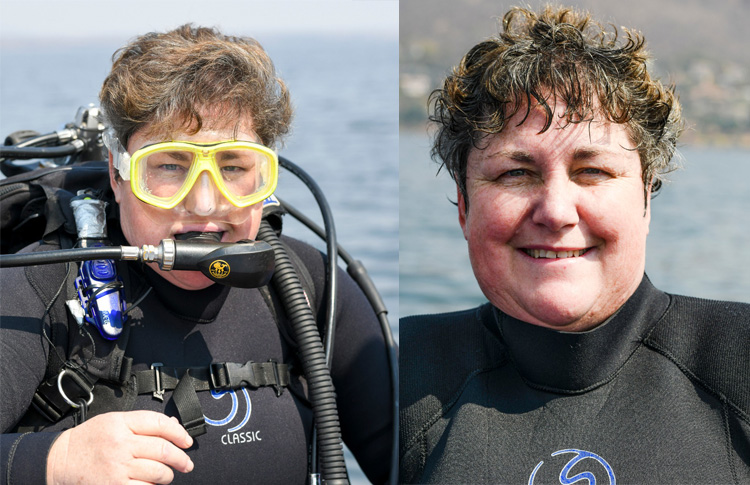
PRETORIA – Meet Lieutenant Colonel Anzari Fourie. The member is the only female diver in the North West Province. Born and bred in Klerksdorp. The member began her career in the SAPS in 1990 when she was only twenty years old.
With thirty years’ service, the member is the Provincial Commander responsible for Emergency Response Services and holds a BA degree in Policing.
The member has served as a police diver for the past 12 years attending to all water-related incidents. In a period of a year, the member and her team respond to at least 80 drowning incidents only in the North West Province.
As a police diver, Lt Col Fourie is responsible for the search and recovery of bodies and objects in various water sources such as dams, rivers, irrigation water channels, quarries, and during floods.
The majority of police diving takes place in murky waters with zero visibility which means Lt Col Fourie and other divers often have to rely on their sense of touch to get whatever it is they are recovering.
“Ninety percent of our diving work is done in dark waters where you must feel to recover a body or an object”.
Just last week, she coordinated the recovery of an eight-year-old boy and a five-year-old girl at an Irrigation Canal in Brits, North West. With the assistance of community members, both children’s bodies were recovered.
In February this year, Lt Col Fourie and her team were instrumental in saving the lives of 16 residents residing in Taung and the Reivilo area following devastating floods in the North West province.
“The floods were so severe that the roads were submerged in water and people tried to drive through the flooded areas. Some vehicles were swept away and people were trapped inside and on top of vehicles as well as we had two people trapped on trees because their vehicles had been washed away”.

“Our North West Police divers together with the Search and Rescue K9 handlers assisted us in this operation and we, fortunately, were able to save lives, our members walked and swam in those raging waters and managed to give each survivor a life jacket whereafter they would assist them back to safety”.
In her career as a police diver, most of the incidents she has responded to were drownings where children were involved. The member has taken this opportunity to raise awareness to responsible parenting and teaching children how to swim at a young age.
“In most of the cases, children play around water sources such as quarries, rivers, dams, and irrigation channels. Our biggest challenge is the irrigation channels because they have rapid flowing water”
“Water education is very important and I wish all schools and communities especially those living near water sources would focus on educating children on the dangers of playing near water and also if possible giving swimming lessons to children. So basically children must be taught on swimming and water safety”.
The member has shared a few safety water tips for communities:
- Children should not be allowed near water sources without adult supervision even if they can swim
- If children do swim or go on school-related water sporting activities, such as boating or rafting, all of them should wear a lifejacket
- Children and adults must not swim in water bodies they are not familiar with, for example, rivers, dams, and irrigation canals
- Children are advised never to jump into the water to save a friend, rather use a stick or a floatation device they can throw to their peer to pull them out
To qualify as a police diver, a SAPS member needs to have at least two years of operational experience. The member will then undergo the necessary training to qualify and only after they are registered at the Department of Labour as a police diver will they be allowed to work in this environment.
To Lt Col Fourie and other female divers in the organisation, we appreciate the work that you do often in challenging circumstances. Thank you for always placing the safety of others before your own.












Facebook Comments