


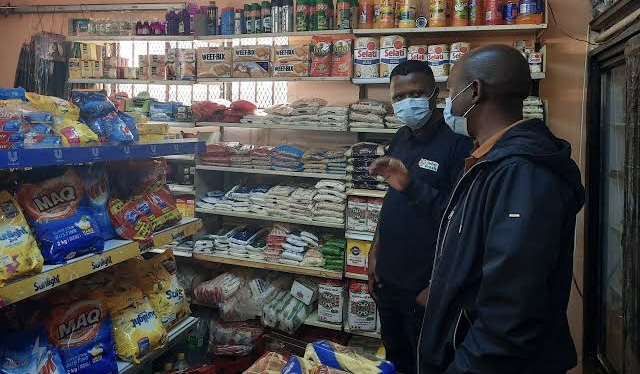
Following the hospitalisation of over 100 children and the deaths of six in Gauteng due to suspected food poisoning, government officials have ramped up enforcement of consumer protection regulations.
Raids conducted on spaza shops revealed significant non-compliance with these standards. This week, the National Consumer Commission, along with other stakeholders, inspected 29 spaza shops in Soweto.
Gauteng has been facing a string of suspected food poisoning cases. Earlier this month, six children died in Naledi, Soweto, allegedly after consuming food from a spaza shop.
On October 10, over 70 learners in the West Rand needed medical care in another suspected food poisoning incident.
Five days later, 47 primary school learners in Pretoria were treated for similar symptoms. Most recently, on October 17, 25 learners in Bronkhorstspruit fell ill, again due to suspected food poisoning.
Last week, Minister in the Presidency Khumbudzo Ntshavheni urged caution, saying: “We must take a decision as a society that we are not buying at the spaza shops when we are not sure where they are buying their products. We are not buying at spaza shops where spaza shops are not registered in their municipalities.”
The deaths of the six children have also underscored the urgent need for more health inspectors. Soweto, with a population exceeding 1.5 million, is served by just 33 environmental health practitioners. Naledi alone is estimated to have more than 88 spaza shops.
Sergio Isa dos Santos, the DA’s shadow MEC for education in Gauteng, raised concerns about the low number of inspectors. “In a recent oversight of local spaza shops in Soweto, it was revealed that there are 16 inspectors assigned to oversee 19 wards in Region D1 Soweto. This is considerably lower than the global health standards of having one inspector per 10,000 people. This deficiency jeopardises the safety of our children and secure communities,” he said.
However, Corrie Bezuidenhout, Johannesburg’s deputy director of environmental health, rejected claims that inspections were not happening regularly. He stated that the last spaza shop inspection took place in August.

Motalatale Modiba, spokesperson for Gauteng health, warned that many food poisoning incidents result from improper storage of food near chemicals such as pesticides. “It is important that the public avoids using any chemicals near food or drinks to prevent accidental ingestion or contamination,” he said.
He also advised against purchasing food past its expiry date, as this increases the risk of food poisoning.
To address the sale of expired food, the DA advocated for a comprehensive approach, including verifying spaza shop compliance certificates and ensuring that all food and drink sold is safe, uncontaminated, and within its expiry date.















Facebook Comments