


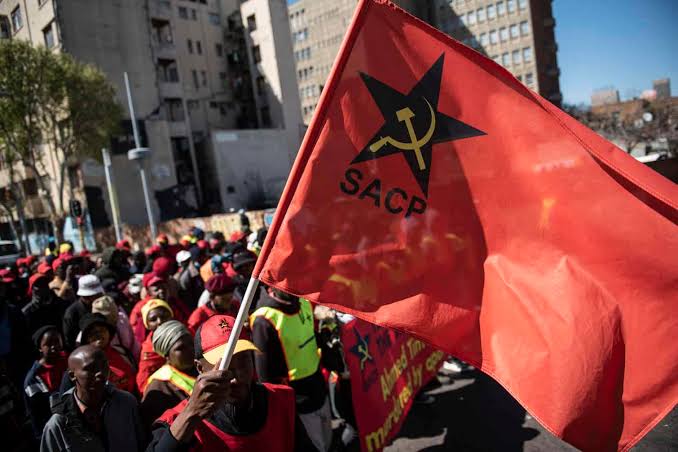
The South African Communist Party (SACP) has firmly rejected the government’s proposal to raise the Value-Added Tax (VAT) by 0.5 percentage points in both the 2025/2026 and 2026/2027 financial years, warning that the move would place an unfair burden on low-income earners.
According to the party, VAT increases tend to impact the poor far more than the wealthy, with the bottom 40% of income earners bearing the brunt.
The SACP expressed concern that even though the proposed VAT hike is lower than the previously suggested 2%, its effects remain deeply regressive. The party argues that increasing VAT erodes the limited purchasing power of the poor and working class, making basic goods and services even less affordable.
In his budget speech, Finance Minister Enoch Godongwana announced that the VAT rate would climb from its current level to 16% by the 2026/2027 financial year.
However, the SACP criticised the move, stating that it contradicts claims that the budget is pro-poor and inclusive. They highlighted that those in poverty, particularly in underdeveloped regions like former Bantustan areas with limited infrastructure and public transport, will feel the sharpest effects of the increase.
The party also challenged the idea that zero-rated items sufficiently protect the poor, noting that many of the ingredients and production inputs for these goods are still subject to VAT, ultimately affecting final prices.
Instead of raising VAT, the SACP proposed more progressive alternatives. Citing modelling by the Applied Development Research Solutions, the party suggested a 0.5% wealth tax on the richest 20% of society could generate revenue comparable to a 2% VAT hike. This approach, they argue, would be fairer and avoid placing additional strain on the poor.
Additional recommendations included raising corporate income taxes, introducing a capital transactions tax, and improving regulatory measures to address illicit financial flows. The SACP also called for stronger action against corruption and wasteful government spending to ensure public funds are used effectively.
The party emphasised the need to shift the tax burden to those with the greatest financial capacity, such as large corporations, the wealthy, and multinational entities, instead of continuously targeting vulnerable communities.

Echoing this sentiment, the National Union of Public Service and Allied Workers (Nupsaw) also rejected the VAT hike, describing it as a betrayal of South Africa’s working class.
The union criticised the budget for failing to account for the everyday struggles of workers, particularly in the face of rising costs for electricity, food, and transport.
Nupsaw warned that if the National Treasury continues to pursue austerity measures and neoliberal policies, poverty, unemployment, and inequality in the country will worsen.
The union urged other labour organisations to unite in opposition to the budget, which it claims shifts the responsibility of funding the government onto those least able to afford it.
Both the SACP and Nupsaw have called for a complete rethink of the government’s tax strategy, urging leaders to prioritise equity, social justice, and long-term economic sustainability.













Facebook Comments