


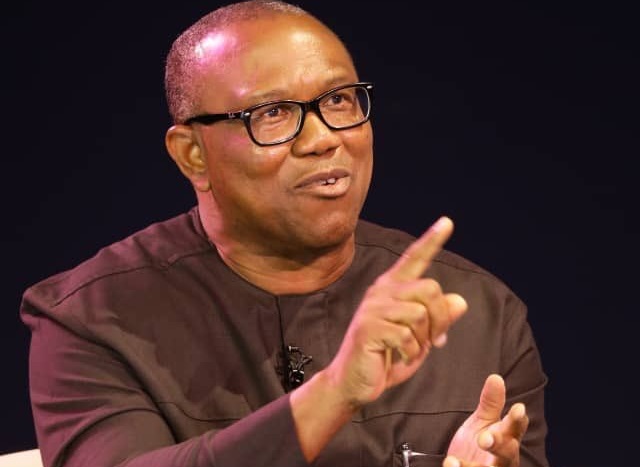
Peter Obi, the 2023 Labour Party Presidential Candidate, has expressed profound concern over the country’s economic outlook since 2015.
Obi, in a statement released on Monday via X, emphasized the disparity between Nigeria’s economic performance in the early years of its return to democracy and its current position.
“When Nigeria returned to democratic governance in 1999, it maintained an average GDP growth of about 6.72% for 16 years from 1999-2014,” Obi stated in his essay.
However, he noted that this rise was not sustained, with GDP growth falling to 2.79% in 2015 and the economy entering recession in 2016.
He continued: “In 2014, just before the inception of a new administration a year later, Nigeria had the biggest economy in Africa with a Gross Domestic Product of $568.5 billion and a GDP Per Capita of about $3,200.”
In contrast, he stated that by 2023, Nigeria will have slipped to the fourth largest economy in Africa, with a GDP of $375 billion and $1700 per capita.
As a result, the situation worsened in 2024, with GDP falling to an anticipated $253 billion and per capita reaching $1087.
This is based on information from StatiSense, an AI data provider that specializes in bank statement review, financial report analysis, and AI chatbot services.
The former governor then voiced concern over the current situation, stating, “Poverty is widespread and growing today.” The rate of unemployment is growing. The increase in food prices has reached above 43%. Both local and foreign investors are fleeing in significant numbers as they lose faith in the potential growth of our economy. Companies are closing their doors.

Obi criticized the current government and demanded immediate action to stop further economic collapse and shift the economy from consumption to manufacturing.
Obi stated, “The country needs to shift from consumption to production and take immediate action to prevent further economic collapse.”
“However, our leaders are more concerned with funding their personal luxury and luxuries while placing blame on others who are only dedicated to solving the country’s problems, rather than worrying ourselves with all these challenges threatening our collective existence and finding ways to recreate an inclusive and sustainable economy, pull millions of people out of poverty, and return our nearly 20 million out-of-school children to schools.
“In spite of these challenges, we as leaders must commit to achieving inclusive and sustainable growth in order to lessen the suffering that befalls our fellow Nigerians. That is the only way we can build a peaceful and safe society.











Facebook Comments