
Gayton McKenzie fires entire film council after ignored warning


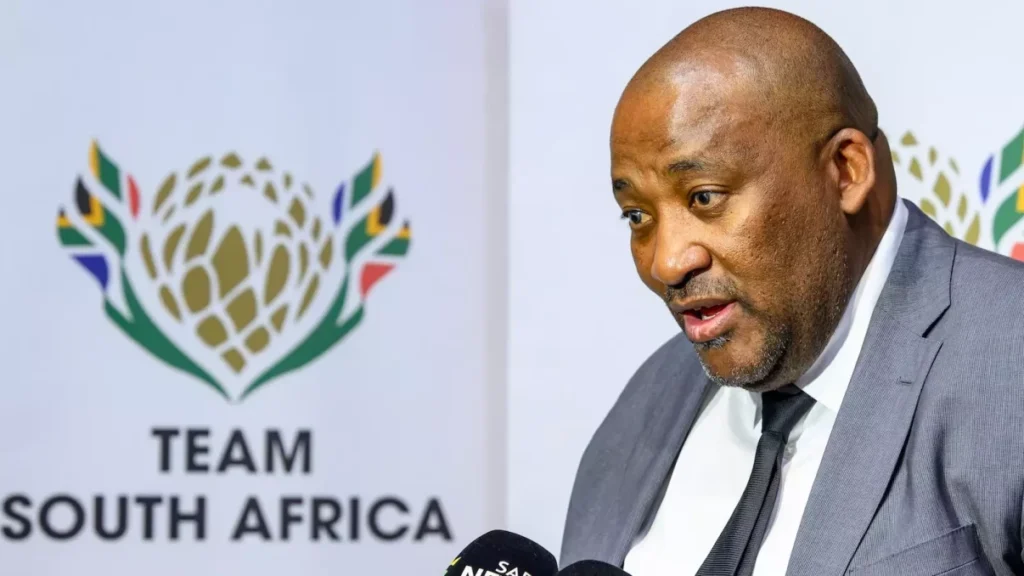
PRETORIA — Sport, Arts and Culture Minister Gayton McKenzie has dissolved the entire council of the National Film and Video Foundation after it acknowledged making an unlawful executive appointment but failed to correct the arrangement despite being warned by the minister months earlier.

The decision removes the governing council of one of South Africa’s most important film funding institutions at a time when filmmakers, production companies, actors and crews depend on the NFVF for funding and industry support.
McKenzie formally dissolved the council on 23 September under the National Film and Video Foundation Act, following a dispute that began on 7 July when he wrote to the council’s then chairperson about legal problems surrounding the appointment of one of its own members as acting chief executive officer.
According to the Department of Sport, Arts and Culture, McKenzie provided the council with two lawful alternatives to resolve the problem. Neither was implemented and the arrangement remained in place.
The council later conceded in written representations that section 13(4) of the NFVF Act did not permit the appointment that had been made. It also accepted that the resignation of the council member concerned had been defective, meaning she effectively occupied an executive position while remaining a member of the body responsible for oversight.
The council member has been identified in media reports as Nondumiso Madlala.
McKenzie issued a notice of his intention to dissolve the council on 14 September and invited it to make representations. The council responded four days later, but the minister ultimately concluded that its response was insufficient to restore his confidence.
“I gave this Council written notice of the problem in July and offered it two lawful ways out. It took neither,” McKenzie said, adding that the arrangement ended only after dissolution was placed on the table.
The ministry said the decision was not a finding that individual council members had acted dishonestly. It instead framed the dissolution as an accountability measure arising from failures at an institutional level.
Other issues also contributed to McKenzie’s decision, including the resignation of the council chairperson and the council’s handling of the former acting CEO’s suspension. The ministry said guidance provided on that matter was also ignored.
The intervention comes against a longer period of instability at the NFVF. The organisation had six chief executives in the space of about 30 months by September 2025, according to GroundUp, reflecting persistent leadership churn at an institution tasked with supporting the development and promotion of South Africa’s film and video industry.
It is also not the first time McKenzie has dissolved an NFVF council. He previously removed the council in July 2024 amid allegations of mismanagement and corruption.
That history has created an immediate concern for the industry: whether another leadership intervention could delay money already committed to productions.
McKenzie has moved to address that risk. The NFVF’s CEO will temporarily assume the responsibilities of the accounting authority under the Public Finance Management Act until a new council is appointed. Approved and committed funding, including money under the current PESP6 Blockbuster cycle, is expected to continue being processed.
The minister specifically acknowledged what happened following the previous dissolution, when funding approvals stalled for three months, and said the department intends to prevent filmmakers and production workers from carrying the cost of the latest governance dispute.
An independent investigation into whistleblower allegations at the NFVF will also continue. The investigation is being conducted by the department’s Internal Audit unit rather than the dissolved council, meaning its work is not expected to be interrupted by the leadership change.
The process of appointing another council will now begin under the NFVF Act. For South Africa’s film industry, the immediate test will be whether the department can replace the council and address the governance failures without repeating the funding disruption that followed the previous intervention.
Anyone with additional information can contact the press desk at press@townpress.co.za or drop a tip on our annonymous platform https://tips.townpress.co.za/