


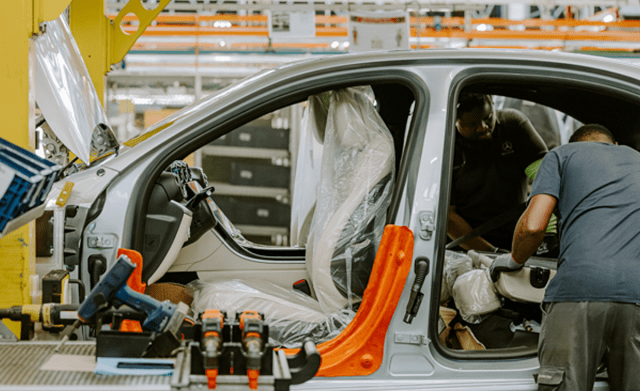
Mercedes-Benz is reportedly exploring a plan to share its South African manufacturing facility with Chinese automaker Great Wall Motor (GWM), a move that could improve factory efficiency and safeguard jobs amid global trade pressures.
The discussions focus on co-manufacturing vehicles at Mercedes-Benz’s East London plant in the Eastern Cape. If an agreement is reached, it could help reduce operating costs, optimise factory utilisation and strengthen the plant’s competitiveness.
According to industry sources, GWM has presented a proposal to South Africa’s Department of Trade, Industry and Competition, expressing its interest in producing vehicles at the facility. However, talks are still ongoing, and no final agreement has been confirmed.
Mercedes-Benz South Africa said it regularly evaluates how to maintain global competitiveness across its production sites. “Mercedes-Benz strives to ensure that all its production sites remain globally competitive, are on an optimal operating point and adapted to new requirements whenever necessary,” the company said.
GWM South Africa also confirmed it is exploring ways to expand its local manufacturing footprint, though it declined to provide further details.
Mercedes-Benz invested around €600 million (approximately R11 billion) to upgrade the East London factory in 2022. The facility currently employs around 2 400 workers and is considered one of South Africa’s key automotive manufacturing hubs. Sharing production capacity with another automaker could help offset unused capacity while maintaining employment levels.
The potential partnership comes amid growing global trade tensions affecting vehicle exports from South Africa. Mercedes-Benz has been exporting its C-Class sedan to the United States since 1997, benefiting from duty-free access under the African Growth and Opportunity Act (AGOA). However, recent US tariffs and the planned 15% global levy on imported goods could put pressure on the export model.
For GWM, manufacturing vehicles locally could help meet rising demand for its SUV and bakkie brands, including Haval and Tank. Typically, factory-sharing arrangements involve the plant owner producing vehicles for another brand under a per-unit fee. While the East London line could accommodate additional production, GWM would likely need its own body shop for vehicle structure assembly and painting.













Facebook Comments