


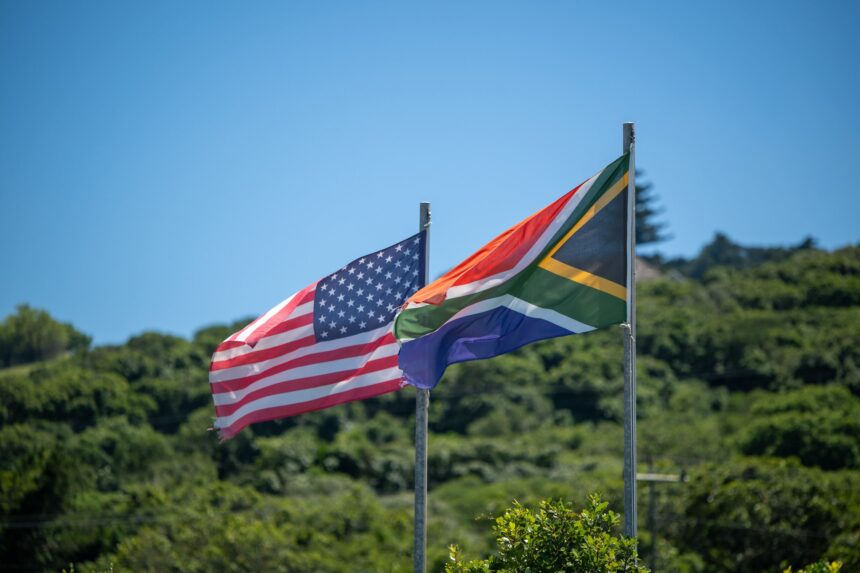
Relations between South Africa and the United States have deteriorated sharply, with diplomatic tensions now spilling over into economic consequences.
The rift deepened after US President Donald Trump refused to attend the 2025 G20 Summit in Johannesburg and subsequently excluded South Africa from the 2026 G20 gathering in Miami. Washington has also suspended all aid to Pretoria.
The strain is fuelled by claims emanating from the US about a so-called “white genocide” and criticism of South Africa’s land reform policies. Analysts suggest, however, that the country’s close ties with Russia, China and Iran are likely a significant factor in the US’s hardening stance.
Economists warn that while the impact on South Africa’s economy is not yet fully visible, the effects could take hold over the next year or two.
Aluma Capital chief economist Freddie Mitchell said the situation may appear stable for now, but the consequences of these political decisions are expected to unfold gradually, similar to how interest rate shifts take time to influence economic activity.
South Africa also remains exposed to the 30 percent “Liberation Day tariffs” imposed by the US earlier this year. Although some temporary relief has been granted for selected agricultural goods, most exports continue to face the punitive duty.
The motor industry has been particularly affected, with exports of the Mercedes-Benz C-Class from East London reportedly falling by about 70 percent.
In response, government has begun exploring new markets and expanding its export focus to 27 additional countries as part of an effort to reduce reliance on the US.
Mitchell noted that the Johannesburg Summit had emphasised the need for more inclusive global governance, with strong backing from the Global South.

The US’s withdrawal from cooperative discussions, he said, signals deeper fractures in multilateral structures.
He added that the Johannesburg Declaration, which calls for reforms to global financial systems, directly challenges long-standing US dominance.
Analysts argue that South Africa now faces a pivotal moment in shaping its foreign policy and economic strategies. The country must weigh the benefits of remaining closely aligned to the G20 against the potential of forging new alliances and trade networks.
Mitchell cautioned that although the immediate fallout may be limited, the weakening relationship with the US poses a significant long-term risk.
He said the coming months would show the real cost of this diplomatic chill as South Africa implements its alternative strategy in a shifting global landscape.
Political analyst Zakhlele Ndlovu believes the consequences could be severe, warning of a possible retreat by US investors. He argued that South Africa risks further economic damage if the diplomatic stand-off continues.
By contrast, researcher and advocate Sipho Mantula from the Thabo Mbeki School of Public Affairs maintains that the situation presents an opportunity for BRICS nations and the broader Global South to assert themselves and reshape global engagement rules.










Facebook Comments