


Johannesburg — The Democratic Alliance (DA) has confirmed that veteran politician Helen Zille will stand as its candidate for Mayor of Johannesburg, setting the stage for a high-profile contest in South Africa’s largest city.
Zille, 74, currently serves as chair of the DA’s Federal Council and is widely known for her previous roles as Mayor of Cape Town and Premier of the Western Cape. Her return to frontline local politics comes at a turbulent time for Johannesburg, which has seen 11 mayors since 2016 amid unstable coalitions and worsening service delivery.
In announcing her candidacy, Zille pledged to focus on stabilizing the city’s finances and tackling Johannesburg’s mounting infrastructure crisis, estimated at more than R200 billion. She highlighted water security, electricity reliability, waste management, and road repairs as urgent priorities. “This is a choice between decay and renewal,” Zille said, promising to apply lessons from Cape Town’s governance to turn Johannesburg around.
The DA hopes Zille’s experience and reputation for administrative discipline will reassure voters frustrated by political instability and failing municipal services. However, her candidacy also carries challenges. Zille remains a polarizing figure, with critics citing her controversial remarks on race and colonialism as potential liabilities in Johannesburg’s diverse electorate.
Reactions from Rivals
Other parties have responded swiftly to Zille’s return. The African National Congress (ANC) described her nomination as unsurprising, with Secretary-General Fikile Mbalula suggesting that voters, not rivals, would deliver the final verdict. Regional ANC voices were sharper, accusing the DA of pursuing a narrow agenda that does not reflect transformation.
The Economic Freedom Fighters (EFF) dismissed Zille as out of touch with Johannesburg’s realities, arguing that she cannot relate to the city’s deep-rooted inequalities. ActionSA leader Herman Mashaba went further, calling her nomination a setback for South Africa and claiming it signals the DA’s lack of faith in Black leadership.
These reactions underline the contentious atmosphere surrounding the DA’s campaign and the obstacles Zille will face in building a coalition strong enough to challenge the ANC’s dominance in Johannesburg.
Analysis
The ANC enters this contest weakened by a shortage of compelling candidates, with many of the names expected on its ballot struggling to inspire public confidence. Rumours suggest Zille’s decision to run has already triggered urgent meetings within ANC ranks, reflecting unease at the strategic implications. The move is seen by some as a direct response to President Cyril Ramaphosa’s own praise of the Western Cape long governed by the DA as a standard of excellence, a remark that reportedly stirred Zille’s ambition to return to the fray.
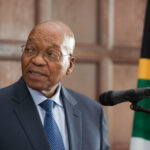
While the DA could gain momentum from Zille’s candidacy, the party that may stand to benefit most from the shifting dynamics is Jacob Zuma’s MK party. The MK has been actively recalling ANC and EFF figures into its ranks and focusing on what it frames as the “real core of politics” ensuring resources flow to the grassroots rather than being consumed in rhetoric. In a fractured political landscape, their positioning could allow them to expand influence in Johannesburg and beyond.

Johannesburg’s mayoral contest, expected ahead of the 2026 local government elections, will be closely watched as a test of whether the opposition can break long-standing ANC dominance in South Africa’s economic hub.
Anyone with additional information relating to this story can contact us through email press@townpress.co.za.










Facebook Comments