


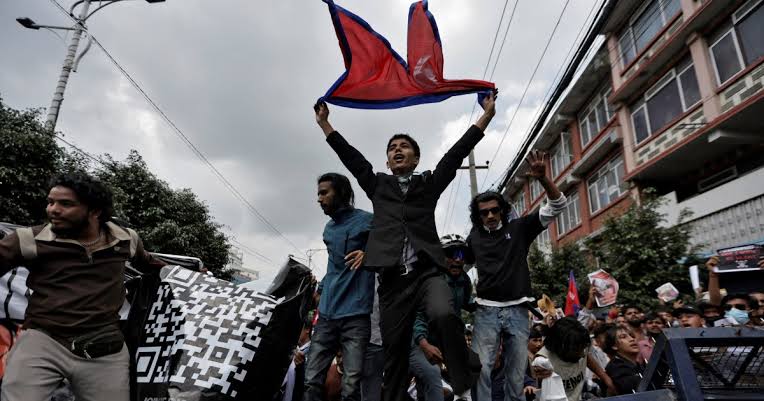
Nepal’s President Ramchandra Paudel has urged restraint and dialogue after violent protests swept across the country, leading to the resignation of Prime Minister Khadga Prasad Sharma Oli. Demonstrations erupted in response to a government ban on unregistered social media platforms, a move that sparked anger among young people and resulted in at least 19 deaths during police crackdowns.
Despite authorities restoring access to the apps on Monday, unrest continued. Protesters torched parliament and even the president’s office, while Oli’s own residence was also set alight. In his resignation letter, the veteran leader said he hoped stepping down would open the way to a political solution. His whereabouts remain unclear.
The Rise and Fall of KP Oli
A towering figure in Nepalese politics, Oli spent nearly six decades in public life. He first entered underground communist politics as a teenager and was jailed in 1973 for campaigning against the monarchy, serving 14 years in prison, including four in solitary confinement. His writings during detention, often scribbled on cigarette boxes, reflected a defiant spirit that defined his later career.
After his release, Oli rose through the ranks of the Communist Party of Nepal–Unified Marxist-Leninist (CPN-UML), winning elections and securing four terms as prime minister. His most recent government was formed in 2024 in coalition with the centre-left Nepali Congress.
A Cult of Leadership
Oli, popularly known as “KP Ba” (“Father KP”), cultivated a personality cult within his party, with banners and cutouts celebrating his image at rallies. Political analysts note that he successfully aligned the party’s identity with his leadership but developed an authoritarian streak, often dismissing criticism and insisting his decisions were final.
In foreign policy, Oli sought to balance Nepal’s delicate position between India and China. He expanded ties with Beijing to reduce reliance on New Delhi, while also using populist rhetoric against India, often casting it as an overbearing “big brother.” These tactics, along with promises of economic growth, boosted his popularity but also deepened divisions.
Uncertain Path Ahead
Oli’s resignation has plunged Nepal into yet another phase of political uncertainty. The country, which became a republic in 2008 after abolishing its monarchy, continues to grapple with instability and shifting coalitions. As protests persist, President Paudel has appealed for unity, urging citizens and political leaders alike to seek dialogue and prevent further escalation in the fragile Himalayan republic.












Facebook Comments