


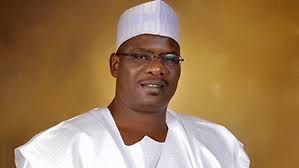
His public criticism of Tinubu’s leadership and highlighting the administration’s shortcomings, especially in its handling of the economy, served as the catalyst for his removal. The All Progressives Congress responded by calling Ndume’s remarks “propaganda” and “unbecoming of a member of the APC caucus,” and they requested that he resign from the party.
The punitive character of this action is highlighted by the prompt replacement of Ndume as the CW by Tahir Monguno and Ndume’s appointment as the chair of the Senate Committee on Tourism.
Ndume wasn’t dishonest. The President appears to be too cut off from the people, and there is hunger throughout the nation.
Free speech and dissent are not only fundamental rights in a democratic society, but they are also essential to the development and well-being of a nation
The outcry against Ndume’s removal has been intense. The move has been denounced by labor leaders, activists, and regular Nigerians as an obvious attempt to restrict free expression. They contend that it creates a risky precedent to silence opponents, particularly those who work for the government. It gives the public and fellow lawmakers the unmistakable impression that disagreement is not acceptable.
The National Assembly, which is accused of being a “rubber stamp” parliament, has shamelessly surrendered to the executive branch under Tinubu, with the Senate led by Godswill Akpabio and the House of Representatives by Tajudeen Abbas.
All of the government’s branches have demonstrated an alarming pattern of suppressing free expression.
Following an interview, the Senate summarily suspended Abdul Ningi (PDP, Bauchi Central) for three months in March. According to Ningi, N3.7 trillion was added to the 2024 budget for projects that had no fixed site. The Senate tightened down on Ningi, who claimed that the executive paid some ranking senators N500 million each for constituency projects, rather than defending itself. 77 days later, he was called back.
For voicing opposing opinions, journalists, activists, and even regular people have experienced intimidation, harassment, and even arrest. Law enforcement organizations have frequently been utilized by the government to quell criticism and stifle opposition.

In addition, the administration is alleged to have employed the police to quell rallies and demonstrations.
These acts have far-reaching consequences that go well beyond Abuja’s corridors of power. The fundamental foundation of democracy is at risk when political disagreement and free expression are suppressed. It hinders serious examination and candid discussion. It sends a terrible message to all Nigerians when elected officials are punished for speaking out.
This can therefore lead to bad governance, corruption, and a severe mismatch in the relationship between the governed and the governed.
This provides more evidence of the instability of Nigeria’s democracy. Nigeria is ranked 15th out of 180 nations in the Fund for Peace’s 2024 Fragile States Index, with a score of 96.6. With 12.7, Norway is in first place.
As a result, maintaining democratic principles, such as the freedom of expression and dissent, is something that the Tinubu government and the NASS need to reaffirm. They ought to stop trying subtly to intimidate dissenters. Criticism helps the government make important policy and governance improvements by offering insightful input.
In order to ensure that the government is held accountable and that the opinions of the people are heard, civil society organizations and the media are essential.
It is the duty of all Nigerians to uphold the right to free expression and make sure that their nation continues to be an example of democracy in Africa. The administration needs to understand that disagreement is an essential part of a robust democracy, not a threat. Nigeria can only prosper by accepting and appreciating differences in viewpoints.












Facebook Comments