
The DA’s campaign has made a case bigger than this election


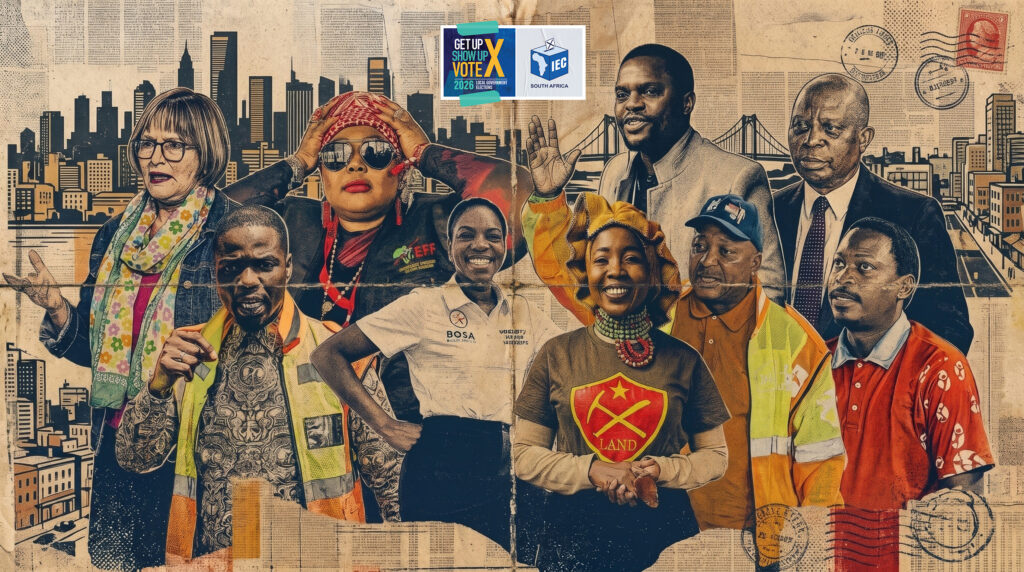
JOHANNESBURG — The Democratic Alliance’s municipal election campaign has strengthened an argument that reaches beyond who runs our towns and cities: South Africans should seriously consider giving the party an opportunity to lead the country. Its organised advertising, consistent communication and visible determination suggest a party that understands confidence must be earned before power can be entrusted.

That is my reading of the campaign, not a claim that every South African shares its politics. Just four minutes before finalising an earlier version of this piece, I saw a helicopter carrying a “VOTE DA” banner. I was struck by the ambition. Across television, public appearances and multilingual campaign material, the party has repeatedly brought voters back to a recognisable proposition: get municipalities working.
A helicopter cannot repair a water pipe. But the coordination behind a campaign tells us something about an organisation’s priorities, preparation and ability to communicate. Those qualities matter when the responsibility being sought is public administration.
The DA must turn attention into trust
Helen Zille gives the DA a candidate with substantial governing experience. Yet experience does not settle questions about whether her leadership would serve Johannesburg’s different communities equitably. The party must persuade residents who remain unconvinced that its promise includes their streets, settlements and livelihoods.
That is where campaign confidence must become a governing commitment. Investors want predictability, but so do families waiting for housing, traders facing disrupted services and workers spending hours travelling to work. A convincing national alternative must speak to all of them.
Nor should advertising expenditure become our measure of political merit. Smaller parties cannot necessarily buy comparable visibility. The fair comparison is whether each party makes its priorities understandable, its leadership accountable and its promises testable.
The ANC is asking voters to trust an unfinished decision
Reducing the ANC’s entire campaign to T-shirts would overlook its manifesto and achievements that withstand scrutiny. Africa Check found six of nine selected manifesto claims correct, another mostly correct and two unproven. That deserves acknowledgement.
But the ANC’s Johannesburg leadership process exposes a deeper weakness. Fikile Mbalula has said the party’s national officials will determine its mayoral nominee after the election. Frank Chikane, Dada Morero and Loyiso Masuku have been among those considered.
The political message is troubling: give us your vote, and we will settle the leadership question afterwards. Voters deserve greater clarity from a party seeking renewed authority over a struggling city. Another mandate should follow a convincing explanation of what will change, who will deliver it and why previous failures will not recur.
Mashaba and the EFF face different credibility tests
Herman Mashaba has a mayoral record to defend and a programme to advance. My criticism is that confrontations can obscure that offer. ActionSA’s recent advertisement targeting Zille may raise questions its supporters consider legitimate, but it also keeps an opponent at the centre of the conversation. Mashaba needs voters discussing his governing plan with equal intensity.
The EFF has maintained a more recognisable ideological message. Its Johannesburg candidate, Dr Tlaleng Mofokeng, brings a health and rights background that warrants assessment on its own merits. The party’s challenge is to translate its convictions into confidence about implementation.
For voters who regard Julius Malema as unpredictable, louder reassurance will not suffice. The EFF needs credible answers about budgets, appointments and institutional restraint. Equally, opponents should scrutinise those answers rather than substitute the label “ticking bomb” for political analysis.
The rest of the field deserves more than a passing mention
The Patriotic Alliance’s Kenny Kunene and the IFP’s Mlungisi Mabaso enter this contest with experience inside Johannesburg’s administration. That gives them knowledge of the machinery, but also a responsibility to account for it. Neither should be assessed solely on promises about what happens after election day. What they achieved with the authority already available to them matters.
MK’s Bongani Baloyi brings previous mayoral experience from Midvaal. His test is whether personal competence can be supported by a party organisation capable of governing a much larger and more complicated municipality. A capable candidate needs capable colleagues, sound appointments and political backing for difficult decisions.
RISE Mzansi’s Lukhona Mnguni and BOSA’s Nobuntu Hlazo-Webster deserve scrutiny beyond their parties’ size. Their opportunity is to demonstrate that an alternative can be both principled and administratively practical. Their responsibility is to explain how they would exercise influence if they lack the numbers to lead.
The Land Party’s Ntsiki Mazwai and the African People’s Convention’s Mo-Afrika Mandla Mokoena also belong in the discussion. EWN identifies Mokoena as a Johannesburg councillor, while Mazwai enters from public commentary and the arts. Public visibility and council experience offer different advantages. Both must ultimately be tested against a workable programme, a credible team and transparent coalition choices.
A chance to govern must come with conditions
Johannesburg’s contest demonstrates why campaign organisation matters, but also why it cannot be the final verdict. Every contender should explain who they would govern with, which compromises they would refuse and how residents would measure progress.
The DA has, in my view, made the strongest communication case for being taken seriously as a broader governing alternative. Its competitors should answer that organisation with clearer leadership and credible delivery plans.
Giving the DA a chance would not mean giving it immunity from criticism. It would mean accepting that political loyalty must remain conditional, and that a party which deliberately prepares to earn power deserves consideration alongside those asking to retain it.
Anyone with additional information can contact the press desk at press@townpress.co.za or drop a tip.