
The DA could lead three metros and still lose two mayoralties


Opinion |

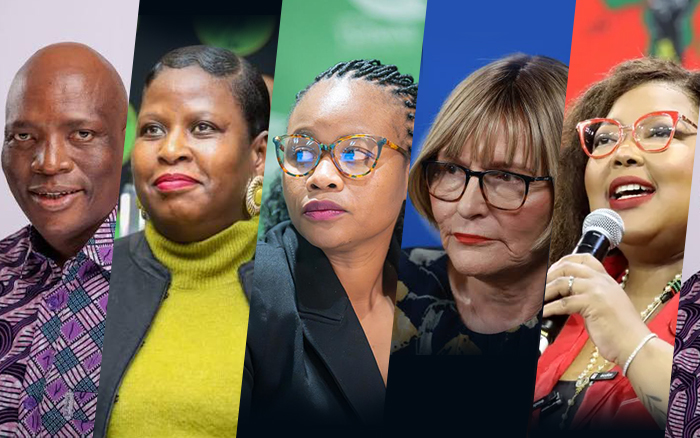
JOHANNESBURG — The DA is well placed to emerge as the largest party in Johannesburg, Tshwane and Cape Town after the 4 November elections. But Nasiphi Moya’s position in Tshwane illustrates why that may not deliver three DA mayors: a smaller party can retain the mayoralty if it assembles the stronger coalition. My assessment is that Cape Town remains the clearest DA prospect, Johannesburg gives Helen Zille a credible but conditional route to office, and Tshwane remains open to another Moya-led administration.
These three cities, representing the country’s commercial centre, administrative capital and parliamentary seat, face different contests. Treating them as a single referendum on the ANC would obscure the negotiations likely to determine who actually governs.
TownPress readers show fragmentation, not a metro forecast
The supplied TownPress reader-poll snapshot places the ANC at 24%, the DA at 20% and the EFF at 18%. The Freedom Front Plus follows at 7%, the MK Party at 6% and ActionSA at 5%. Among provincial responses, the DA leads in Gauteng and the Western Cape, with 3,804 and 1,602 responses respectively recorded from those provinces.
That is useful evidence of sentiment among participating readers, but it cannot establish how Johannesburg, Tshwane or Cape Town will vote. The poll is voluntary, includes responses from outside South Africa and explicitly identifies itself as unscientific. Provincial preferences also cannot be converted into municipal results.
Its strongest editorial value is the fragmented picture it presents. Among these respondents, several parties command enough support to matter. The relatively strong EFF and Freedom Front Plus showings deserve attention, but should not be presented as their expected shares of council seats.
Cape Town: the strongest case for continuity
Cape Town offers the most defensible prediction: a DA-led administration under Geordin Hill-Lewis. The uncertainty is whether the party retains the freedom to govern alone.
As reported on 20 October that recent polls placed DA support between 46% and 52.6%, compared with approximately 60% in 2021. Those readings straddle the majority threshold, making an outright win less secure than the city’s reputation as a DA stronghold might suggest.
There is nevertheless evidence supporting the party’s governing position. An eNCA/MarkData survey found that 60.5% of Cape Town respondents considered their municipality very well or averagely well run, against 29.2% in Johannesburg. These are residents’ perceptions, not audited performance measures, but they help explain why an incumbent can enter one election defending its record while another administration faces widespread rejection.
My judgement is that Hill-Lewis remains the strongest favourite of the three. A reduced majority, or the need for a partner, is more plausible than confidently predicting the DA’s removal.
Johannesburg: Zille’s lead needs a governing agreement
The latest Social Research Foundation/Common Sense release puts the DA at 36% in Johannesburg, the ANC at 22%, MK at 11% and ActionSA at 9%. Its fieldwork ran from 18 September to 12 October. That gives the DA a substantial lead, but leaves it well short of governing alone.
Zille’s campaign has made deteriorating services central to the contest. Reuters describes an energetic campaign built around infrastructure failures in a city that has had seven mayors since the previous municipal election. Her political opportunity comes from connecting those failures to a recognisable alternative administration.
The obstacle is coalition formation. On the SRF figures, the DA and ActionSA together reach 45%, while a DA–ANC combination reaches 58%. These are illustrative sums of polling percentages, not seat projections or evidence that either arrangement will happen.
Zille is therefore a credible front-runner for the mayoralty, but not a safe prediction. Parties can oppose one another during a campaign and still become indispensable negotiating partners afterwards. Equally, a group of smaller parties can agree to exclude the largest.
Tshwane: Moya could outlast a stronger DA vote
Tshwane provides the clearest warning against confusing electoral size with executive control. News24/SABI puts the DA at approximately 32% and the ANC at 24%. The Common Sense’s account of the same survey places the EFF at 14% and ActionSA at 11%.
Those rounded figures put the ANC, EFF and ActionSA together at 49%. They do not establish a majority, but demonstrate how a coalition involving those parties and additional support could challenge a DA-led administration.
Moya already leads a multiparty government, while Cilliers Brink is seeking a return as the DA’s mayoral candidate. That gives voters a contest between identifiable governing records, and gives Moya an existing coalition relationship to defend.
My cautious judgement gives a Moya-led coalition a slight advantage as a governing scenario, even if the DA finishes first. That assessment depends on her partners remaining willing and able to elect her. It is a political inference, not a finding produced by the polls.
For residents, the decisive agreement will extend beyond the allocation of mayoral offices. Johannesburg and Tshwane need coalitions capable of passing budgets, sustaining infrastructure repairs and surviving disagreements without repeatedly replacing their leadership. The election will distribute bargaining power; the agreements that follow will determine whether that power produces a functioning administration.
Anyone with additional information can contact the press desk at press@townpress.co.za or drop a tip.