


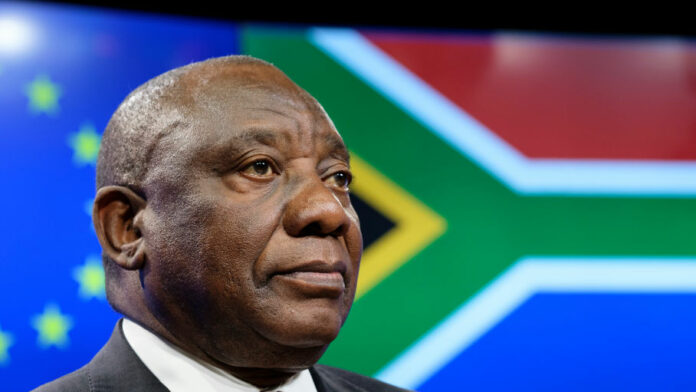
Following its humiliation in an election on May 29, Ramaphosa’s African National Congress—which had held the parliamentary majority for the first time in thirty years of democracy—will now share power with five other parties.
During his inaugural ceremony in the capital Pretoria, Ramaphosa stated that the voters “have been unequivocal in expressing their disappointment and disapproval of our performance in some of the areas in which we have failed them.”
The voters, he claimed, wanted everyone to have access to enough food, decent housing, clean water, reasonably priced and continuous energy, well-kept roads, good medical care for the old and sick, good schools, and other necessities.
Today, I stand before you as your humble servant to say we have heard you,” he stated. “In this moment we must choose to move forward, to close the distances between South Africans and to build a more equal society.”
Following the election, the pro-business Democratic Alliance, which has consented to join the new government and has criticized the ANC’s performance in office, is the largest party still in power: the ANC.
IDENTITY-RELATED SECTIONS
Although the DA’s goal of increasing growth through structural reforms and responsible fiscal measures has been well received by investors, experts warn that the parties’ stark ideological differences could cause instability in the administration.
Ramaphosa signed a National Health Insurance bill into law shortly before the election, which the DA claims could bring down an already creaky healthcare system. What would happen to that law in the hands of the next administration remained unknown.
Ramaphosa has yet to announce the composition of his new government, which will be negotiated with members of the new alliance.

The DA advocates scrapping the ANC’s flagship Black economic empowerment program, arguing that it hasn’t worked.
This is a highly contentious topic in a country grappling with enormous inequalities, some of which are inherited from apartheid. The ANC was once a liberation movement that rose to power under Nelson Mandela’s leadership in the 1994 elections that marked the end of apartheid and had long been unbeatable, but it lost its luster after years of decline.
CRIME AND POVERTY
Voters punished the African National Congress (ANC), which lost millions of votes on May 29 compared to the previous election in 2019, as they were tired of the high rates of poverty and unemployment, widespread crime, rolling blackouts, and corruption inside the party.
Ramaphosa declared, “Our society remains highly polarized and deeply unequal.”
We are divided between those who have jobs and those who do not work, between those who have the means to build and enjoy a comfortable life and those who do not.”
African heads of state and leaders from other countries, including Cuba, a longtime ANC ally, flocked to the Union Buildings in Pretoria, the home of the South African government, to watch Ramaphosa take office.
Interfaith prayers led by leaders of Christian, Hindu, Muslim, Jewish, and traditional African religions marked the start of a military-themed pageantry-filled program that showcased the diversity of the nation.
To applause from the crowd, military helicopters passed over in the bright sunshine, carrying South African flags.











Facebook Comments