


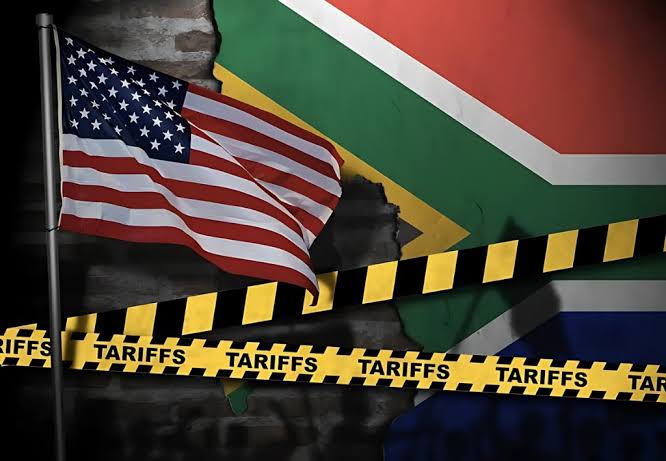
President Cyril Ramaphosa has confirmed that South Africa has dispatched senior government officials to the United States to pave the way for formal trade negotiations. The move follows weeks of heightened tension after Washington imposed steep tariffs on South African imports.
The delegation, made up of representatives from the Presidency and the Department of Trade, Industry and Competition, is engaging with US administration officials, lawmakers, and business leaders in New York and Washington.
The outreach comes in response to President Donald Trump’s recent decision to enforce a 30% tariff on South African goods, citing ongoing trade disagreements and what the White House characterised as Pretoria’s lack of cooperation.
South Africa has argued that it made repeated efforts to prevent the tariff hike, including the submission of a revised trade proposal a month ago, but received no response from Washington.
Ramaphosa told Parliament that the measure was imposed despite what he described as Pretoria’s good faith attempts to resolve the matter. Formal negotiations are expected to begin in the coming days, though the US Trade Representative’s office has not confirmed the timeline.
At the centre of South Africa’s negotiating strategy are its critical mineral reserves, which include platinum, lithium, and rare earth elements. Ramaphosa stressed that while the country is prepared to export these resources, the goal is to ensure they leave as finished products rather than raw materials.
This approach aligns with government’s industrial policy, which emphasises local beneficiation and job creation through value addition.
The trade dispute is unfolding against the backdrop of broader diplomatic strains. Relations between the two countries have been tested by Trump’s controversial programme offering refuge to white South Africans on the basis of unproven claims of racial persecution, a move strongly opposed by Pretoria.
Washington has also voiced criticism of South Africa’s affirmative action policies, designed to address apartheid-era inequalities. Analysts suggest these concerns could surface in the negotiation framework, particularly after Agriculture Minister John Steenhuisen indicated that addressing them may become necessary to secure tariff relief.

Both sides enter talks under pressure. South Africa is seeking to protect its competitiveness in key sectors such as mining, agriculture, and manufacturing, while the Trump administration continues to wield tariffs as a bargaining tool under its “America First” agenda. Whether the upcoming negotiations will break the current deadlock remains uncertain.













Facebook Comments