Ramaphosa friendship puts corruption watchdog under scrutiny


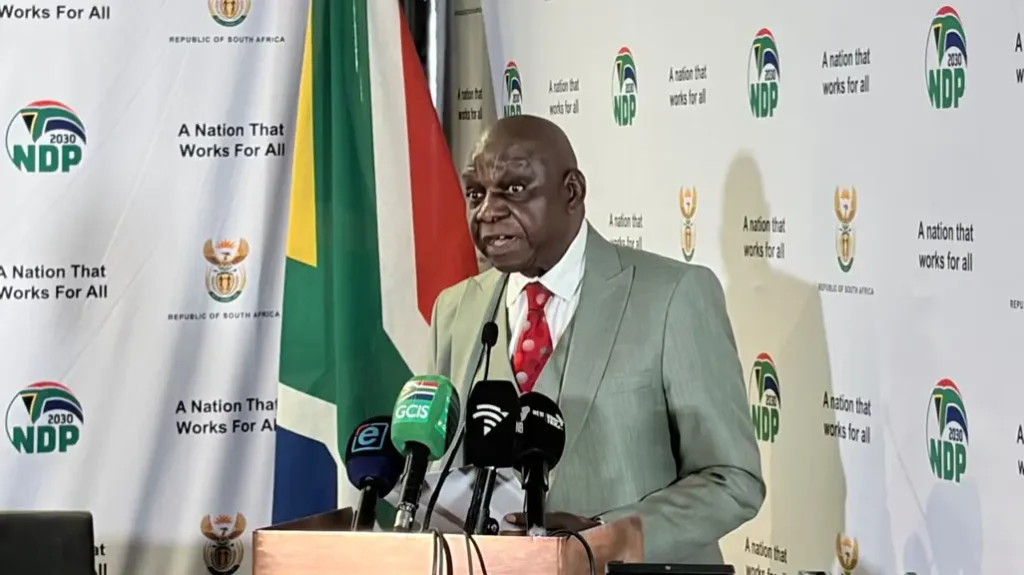
CAPE TOWN — Justice Minister Mmamoloko Kubayi has rejected calls to remove retired judge Takalani Raulinga as South Africa’s anti-corruption watchdog, despite renewed objections over his friendship of more than 40 years with President Cyril Ramaphosa.

The dispute resurfaced during Parliament’s Portfolio Committee on Justice and Constitutional Development meeting on Thursday, when the uMkhonto weSizwe (MK) Party questioned whether Raulinga could independently oversee investigators responsible for pursuing serious corruption cases.
Raulinga heads the Ombud Office of the Investigating Directorate Against Corruption (IDAC), which investigates complaints of abuse of power, misconduct and maladministration involving the specialised anti-corruption directorate.
The controversy centres on a disclosure Raulinga made in 2015 during his interview for the position of Judge President of the Limpopo High Court. He acknowledged a friendship with Ramaphosa dating back more than four decades.
MK Party MP Mzwanele Manyi has repeatedly cited that relationship in challenging Raulinga’s appointment, arguing that it creates concerns about the independence of an office established to hold corruption investigators accountable.
Kubayi dismissed the objection, maintaining that a longstanding personal relationship does not automatically compromise a retired judge’s professional independence.
She also questioned why Raulinga’s earlier disclosure should have counted against him during the judicial appointment process, arguing that judges are expected to exercise independent judgment regardless of their personal relationships.
The minister said there was no basis for replacing Raulinga and suggested that the MK Party pursue its concerns through the Judicial Service Commission.
Raulinga was officially introduced as the inaugural IDAC Ombud in July. He was appointed for a single, non-renewable five-year term to oversee complaints involving the directorate.
The office was established as an additional accountability mechanism within South Africa’s anti-corruption framework, allowing members of the public and IDAC personnel to raise concerns about investigators’ conduct.
Its responsibilities are particularly important because IDAC handles serious corruption and organised crime matters, including investigations that may involve politically connected individuals and senior public officials.
The appointment has been controversial since its announcement. In July, Parliament’s justice committee chairperson, Xola Nqola, rejected the MK Party’s objections and argued that allegations questioning Raulinga’s suitability should be supported by evidence.
The party has not established that Raulinga improperly influenced an investigation or used his position to protect Ramaphosa. Its objections concern the appearance of potential bias rather than a proven instance of misconduct.
Thursday’s parliamentary meeting also exposed disagreement over how Raulinga’s appointment was communicated.
Kubayi criticised former IDAC head Andrea Johnson for revealing the appointment during parliamentary testimony last November, approximately nine months before the official public announcement.
According to the minister, Johnson disclosed the information before the necessary administrative processes had been completed and before a formal appointment letter had been issued.
Kubayi said the announcement had been delayed while regulations governing the oversight office were finalised.
The disagreement comes as Parliament continues examining allegations of corruption and interference within South Africa’s criminal justice institutions.
During recent parliamentary discussions, political parties have also differed over whether IDAC should continue operating or undergo further reforms. Some members have argued that stronger independent oversight is necessary to address concerns about investigators’ conduct.
For Raulinga, the immediate issue is whether the oversight office can establish public confidence while its independence remains politically contested.
Kubayi has made clear that the government does not intend to reconsider his appointment on the grounds presented by the MK Party. The party has yet to establish a legal basis for removing him.
Anyone with additional information can contact the press desk at press@townpress.co.za or drop a tip on our annonymous platform https://tips.townpress.co.za/