
Mbappé Apologises After Mao Zedong Remarks Spark Backlash in China


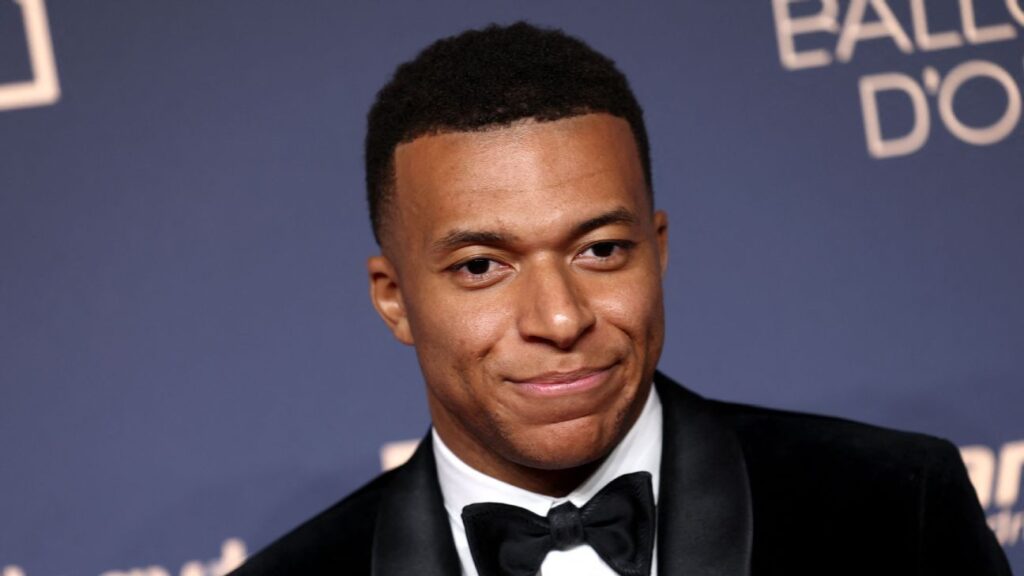
Real Madrid forward Kylian Mbappé has apologised for comments about former Chinese leader Mao Zedong after a controversial meme triggered widespread criticism in China and prompted several major brands to end their partnerships with the French football star.

Kylian Mbappé has issued a public apology following a backlash over remarks about late Chinese leader Mao Zedong, with the controversy threatening the forward’s commercial relationships in one of the world’s biggest consumer markets.
The incident reportedly stemmed from an appearance on the French talk show The Bridge, where Mbappé discussed an internet meme depicting his face superimposed onto an image resembling Mao. The joke forms part of a wider online trend that labels the Real Madrid star a “dictator” because of his perceived influence within football.
During the conversation, Mbappé described the meme as one of his favourites and said he regularly shared it with friends. However, the remarks sparked outrage among Chinese fans, where references to Mao remain particularly sensitive because of his political legacy.
Responding to the criticism, Mbappé acknowledged that his comments had been poorly judged and recognised the offence they had caused among Chinese people and communities around the world.
The forward subsequently apologised to those affected, expressing regret over the impact of his words.
Chinese brands distance themselves from Mbappé
The controversy has placed Mbappé’s commercial partnerships under pressure, with several prominent Chinese companies announcing that they would no longer maintain their associations with the footballer.
Mengniu, one of China’s largest dairy producers, and beverage company Dongpeng were among the brands to issue statements condemning behaviour they considered offensive to Chinese national sentiment. Although their statements did not explicitly identify the interview as the reason for their decisions, the announcements followed the growing online backlash.
Mbappé has established a significant commercial presence in China, where international sporting figures attract substantial endorsement deals and a large consumer following. The withdrawal of sponsorship support therefore represents a potential financial and reputational setback for the French international.
The reaction extended beyond commercial partnerships. According to reports in Chinese media, state broadcaster CCTV’s news platforms would stop featuring content related to Mbappé, while coverage of Spain’s La Liga was also reportedly set to be suspended.
China’s foreign ministry also addressed the controversy. Spokesperson Lin Jian said the government had taken note of the reports and that remarks perceived as offensive to the Chinese people would naturally attract opposition from sections of society.
Social media backlash intensifies
The controversy gained momentum after Chinese football platform Dongqiudi drew attention to Mbappé’s comments, describing them as inappropriate and offensive to Chinese people.
Clips and screenshots from the interview subsequently circulated across Chinese social media, particularly on Weibo, where users criticised the footballer for benefiting from the Chinese market while making remarks they considered disrespectful.
Some users called for a boycott of Mbappé and Real Madrid, while others demanded greater cultural awareness from international sporting figures with global audiences.
The online reaction was further complicated by the circulation of edited clips in which references to Mao and the controversial meme were obscured. This left some users seeking clarification about the original comments and the context in which they were made.
The original interview was reportedly unavailable on the show’s YouTube channel, making it difficult to establish when the conversation first aired. In the circulating footage, Mbappé does not explicitly identify Mao by name, although the meme itself resembles the former Chinese leader.
Why Mao remains a sensitive subject in China
Mao Zedong founded the People’s Republic of China in 1949 and remained the country’s dominant political figure until his death in 1976. His legacy is deeply embedded in Chinese political history, but his rule was also marked by campaigns that caused immense suffering and loss of life.
The Great Leap Forward, an ambitious campaign to accelerate industrial and agricultural production, contributed to a catastrophic famine that killed tens of millions of people. The Cultural Revolution, launched in 1966, brought years of political persecution, violence and social upheaval.
Despite the devastating consequences associated with these periods, Mao continues to hold an important place in the official historical narrative promoted by China’s Communist Party.
As a result, jokes and memes involving Mao can be interpreted as more than ordinary political humour, touching on national identity, historical memory and the legitimacy of the country’s political leadership.
This sensitivity helps explain the scale of the reaction to Mbappé’s comments and the speed with which the controversy spread across Chinese social media and commercial circles.
A wider debate over football, influence and responsibility
The incident has also revived discussions about Mbappé’s public image and the internet culture surrounding his status in football.
Widely regarded as one of the leading players of his generation, the French forward commands a substantial global following and significant influence beyond the pitch. His popularity has made him a prominent figure in advertising, fashion and popular culture, while his perceived authority within football has fuelled the recurring “dictator” joke.
The nickname has previously inspired comparisons with controversial political leaders. During the 2026 World Cup, Mbappé’s France teammate Ousmane Dembélé reportedly joined the trend by referring to him as “Mobut”, a reference to former Zairean leader Mobutu Sese Seko.
However, Mbappé has previously questioned the limits of such humour. In an interview with France Football in September, he warned that memes comparing footballers to historical figures responsible for mass suffering could demonstrate a lack of political and human awareness.
He argued that comparisons with individuals associated with the deaths and misery of millions of people crossed a line, particularly when viewed against the real-world consequences of their actions.
La Liga also issues apology
Spain’s top-flight football league, La Liga, also expressed regret over the controversy, apologising for the offence caused to Chinese supporters by Mbappé’s remarks.
The league’s response highlights the potential consequences of controversies involving globally recognised players, particularly when they affect international fan communities and important commercial markets.
For Mbappé, the apology marks an attempt to address the growing criticism, although the longer-term impact on his Chinese endorsements and popularity remains uncertain.
The episode serves as a reminder that, in an increasingly connected sporting world, comments made in one country can quickly generate international consequences. For athletes whose influence extends far beyond football, cultural awareness and sensitivity can be just as important to their public image as their performances on the pitch.