


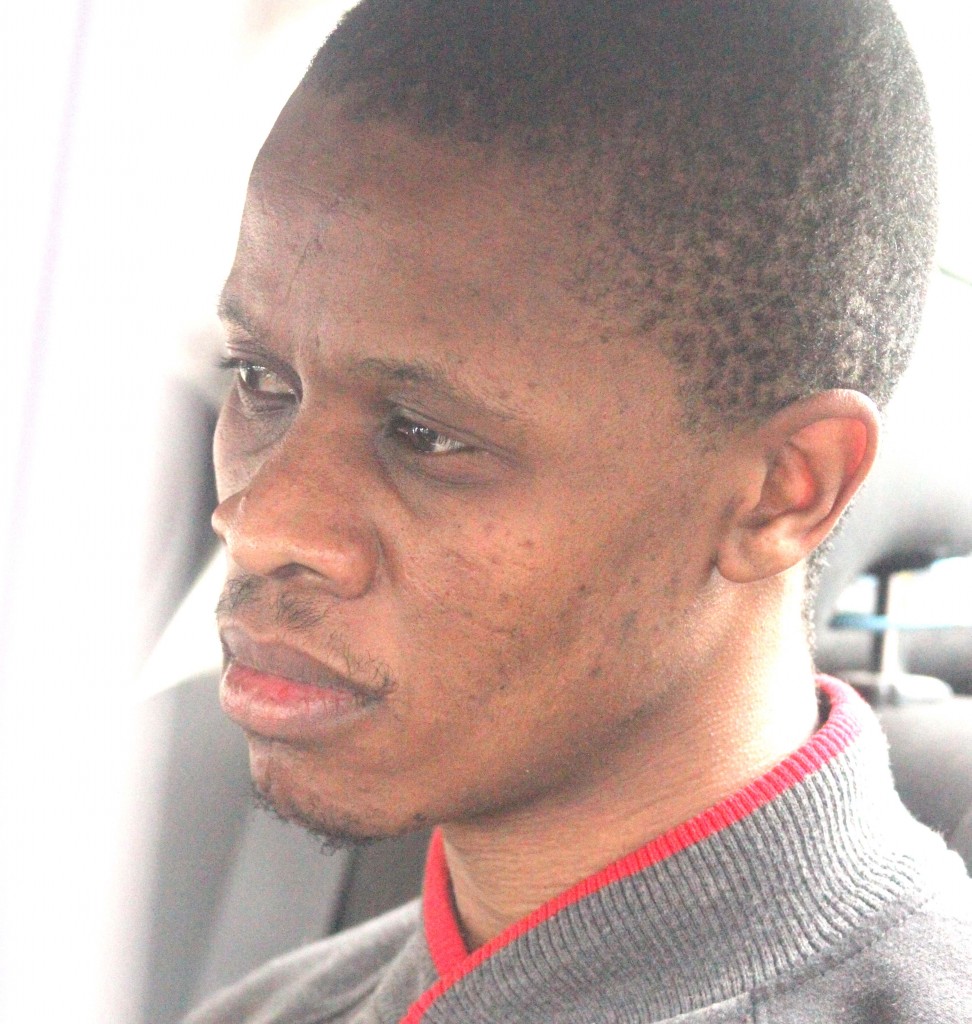
ONE of the highlights of 2015 in Lesotho was the extradition of double ritual murder suspect, Lehlohonolo Scott, from South Africa.
The 30-year old had been charged with the murder of Moholobela Seetsa (13) and Kamohelo Mohata (22) in January and June 2012 respectively. He was arrested on 12 July 2012 alongside his mother ’Malehlohonolo, but escaped from Maseru Central Prison on 14 October 2012 and fled to South Africa.
His life on the run, however, ended on 6 April 2014 when he was arrested in Durban, and extradited to Lesotho on 21 October 2015 following assurances by the government to the South African authorities that the death penalty would not be effected if Scott was convicted.
In this wide-ranging interview, Scott’s lawyer, Advocate Thulo Hoeane, tells Lesotho Times (LT) reporter, Lekhetho Ntsukunyane, about his client’s case and other related issues.
LT: Can you explain why you did not pitch up on some occasions to represent Scott in court following his extradition last October?
Hoeane: I found it very strange that Scott appeared in court on two occasions, yet I was not informed as his lawyer. As a matter of fact, I am paid by the government to represent him. Since the prosecution was aware that I was his lawyer, I expected them to inform me of the court appearances. I don’t know what agenda they had in deciding not to inform me since it was tantamount to ambushing me. Scott has a right to legal representation, and they are aware that I am his lawyer. So they should have informed me.
LT: What was the prosecution’s explanation?
Hoeane: They simply said they had no obligation to inform me (about Scott’s appearances in court) since there is no law that compels them to tell me. Ultimately, it is a matter of courtesy for the prosecution to inform me about his appearance in court. However, there was clearly a courtesy deficit in this instance, and I am very concerned about that because it does not serve the interests of justice for Scott to go to court without any legal representation, which he is entitled to.
LT: What is the usual procedure when an independent defence lawyer like you is hired by the government to represent a defendant such as Scott?

Hoeane: First of all, the suspect or accused person, in all murder cases tried in the High Court, is interviewed by officers of the High Court, particularly the registrars. After the interview, the officers are able to determine whether the suspect can afford legal representation. If they conclude that the suspect cannot afford legal representation, the office of the registrar will then identify a suitable lawyer to handle the matter. This will depend on a number of factors such as experience, the complexity of the case and so on. That is how I was identified by the office of the registrar to handle this case.
LT: What are your credentials as a lawyer?
Hoeane: I have been doing this work since 1988, and handled a number of high profile criminal cases in this country. I represented the foreign mercenaries who attacked Mokoanyane Barracks and Prime Minister Pakalitha Mosisili’s official residence on 22 April 2009.
I was also involved in a high profile case in which members of the army and police had engaged in a shoot-out at Maseru Central Charge Office in 1994. Some high profile people in both the army and police were involved in the shootout, and I represented some of them. I was also involved in a high profile murder case involving the regional manager of a textile factory in Maseru. The three suspects I represented were initially sentenced to death by the High Court. But the judgement was later reviewed by the Court of Appeal and all the suspects were found not guilty, which says a lot about our justice system. If one court can find you so guilty that it can sentence you to death, and another finds you so innocent that you can go home, that is a shocking state of affairs. I can say most of my work, in excess of 90 percent, involves criminal matters as opposed to civil cases.
I will also be representing Setsokotsane Majalle, who is facing murder charges following the brutal killings of two nurses in Thaba-Bosiu in August 2014. I also have appeals of death penalty judgments made by the High Court involving three people. I will be representing them in the next Court of Appeal session in April 2016. The trio includes ’Makhotso Molise, who was sentenced to death for the murder of an elderly lady in Khubetsoana, Maseru. The other two are Tello Mabusela and Hape Mohapi, who were convicted for the murder of three people and rape, respectively.
LT: Were you the only lawyer identified to represent Scott?
Hoeane: Several lawyers were approached but expressed misgivings about the case with regards to their conscience and other factors. However, in my view, it was just another case which was no worse than the others I have dealt with before. There is no doubt that the crime that was committed is shocking, but let us all remember that these are only allegations at this stage. The allegations must be proved in court. The mistake most people usually make is that once a person is charged, we assume that they committed the crime.
LT: Do you think Scott’s case has been politicised?
Hoeane: A lot has been said about Scott and there is a lot of pressure on this case. It is not an easy case to handle. Some people even ask what sort of person I am to be involved in such a case. There has been a lot of pressure from friends and relatives. When my children heard I was representing Scott, they voiced their disapproval. However, as a professional, you have to put all that aside and focus on the job that you have to do. There have also been attempts to politicise the matter, with the police approaching Scott in jail to try to get him to implicate certain opposition politicians. That is unacceptable.
In my view, this is purely a criminal matter. I am Scott’s lawyer because I want to represent him in so far as the two murders which occurred in Koalabata in 2012 are concerned. I am also representing him on this latest charge of escaping from lawful custody. That is all that I want to deal with. As for all these other matters which are said to be political, I think they are just intended to confuse and divert attention away from the real issues – the charges that he faces in court. Scott has assured me that he is ready to go to court and put up a defence. What the court will do about that I do not know. We cannot prejudge or preempt what the courts are going to do because that is contemptuous. We will wait until such a time that the matter comes before court. The date set for Scott’s hearing is 11 April 2016.
LT: Have you encountered any intimidation for representing Scott?
Hoeane: Not particularly. I have not encountered any direct intimidation. The only instance of intimidation were moves to arrest me after I revealed to the media that the police approached Scott in jail to try to get him to implicate opposition politicians.
I was ready for the arrest because I have nothing to apologise for. I don’t know whether the intention to arrest me was abandoned or not, but what I said was the absolute truth. Scott himself told me about the harassment he had been subjected to. If anybody was going to arrest me over that issue, Scott would have been my witness since he is the person who conveyed that information to me. Other than that, there were no threats. It’s only that some people are uncomfortable with my job. I know it comes with the territory; it is what you have to go through as a criminal defence lawyer. In a case such as Scott’s, emotions run high, and people are likely to say a lot of remarks about me. I will not be diverted from focusing on the task at hand.
LT: When Scott was in South Africa, were you in touch with him?
Hoeane: From the time Scott was arrested, I was in contact with him. In South Africa, they allow inmates to use cellphones, so Scott used to phone me from his holding cell. I was also following up the matter with his lawyers in Durban.
LT: Who was paying for Scott’s legal fees in South Africa?
Hoeane: I really don’t know to be honest. I have heard so many claims by politicians about who was making the payments, but I just took them as rumours. When I asked Scott about the matter, he told me that his family used all the money they had to pay for the legal fees. In fact, there was a time when Scott ran out money and I had to negotiate with the lawyer in Durban to continue to represent him while he sorted out the issue.
LT: Save for Scott, many suspects who escaped to South Africa remain at large. Why is extradition so difficult?
Hoeane: Extradition has always been problematic. Lesotho and South Africa only formulated an extradition treaty in 2001. But even after the treaty came into being, it has always been a challenge to implement it, especially where a suspect faces murder charges. This is because South Africa does not extradite people facing the death penalty in the requesting state. However, in Scott’s case, there is a provision in the extradition treaty allowing the repatriation of a suspect if the requesting state makes an undertaking, through the two countries’ Justice ministers, that in the event the court convicts the suspect, they will not carry out the death penalty. The provision was used in Scott’s case, so even if he were to be found guilty and sentenced to death, the penalty would not be carried out because of that undertaking.
LT: What is your opinion regarding the death sentence?
Hoeane: The death penalty is a subhuman and barbaric sentence. It is legalised murder. All civilized legal jurisdictions are moving away from the death penalty because it is only vindictive. It is meant to take revenge on the accused person. The purpose of punishment is to reform a person. In keeping with that, prisons were renamed as correctional institutions. The idea behind the move was to rehabilitate a convict so they can become useful members of society. However, the death penalty doesn’t give convicts that opportunity.
If Lesotho institutes constitutional reforms, one of the aspects we need to do away with is the death penalty. The last person hanged in Lesotho was in 1996. For the past 20 years, no hanging has taken place. Yet in that period, the High Court passed more than 30 death sentences, and they have always been commuted. They have never been carried out because we have always had a Court of Appeal staffed by judges from South Africa. Since South Africa has done away with the death penalty, the judges are not inclined to approve the death penalty. They actually do everything in their power to ensure they hand out any punishment other than a death sentence. That reluctance by the Court of Appeal to pass the death sentence shows that it is about time we started moving in that direction. Why have a law which you hardly use? It shows you don’t need it. Let’s look at other forms of punishment.
LT: What would be the alternative punishment if Scott is sentenced to death by the courts especially when the government has committed not to carry it out?
Hoeane: I think the alternative punishment would be imprisonment. It would be a question of how many years must he serve. That would, however, be a problem because the court would have already dealt with the matter. The government cannot interfere with the courts to an extent that it can instruct how they should sentence Scott. This is the first case of its nature in Lesotho.













Facebook Comments