


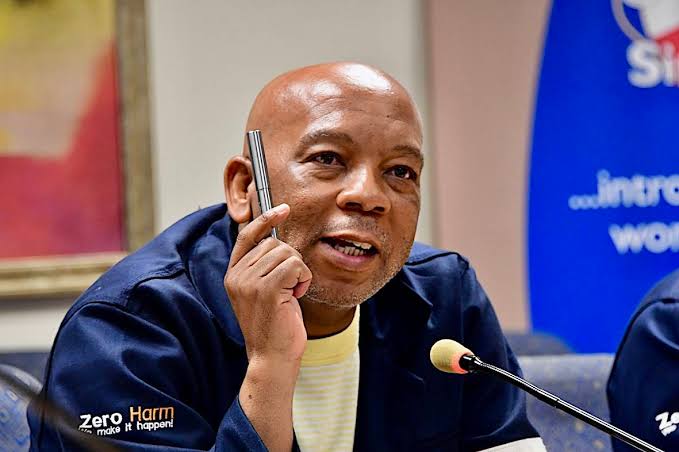
Eskom board members received over R10 million in fees during the 2023/24 financial year, while employees were paid more than R3 billion in overtime during the same period.
This was revealed by Electricity and Energy Minister Kgosientsho Ramokgopa in response to parliamentary questions from EFF MP Mandla Shikwambana.
The minister’s reply detailed that Eskom employees earned R3.03 billion in overtime, primarily for work done outside of normal hours.
This included emergency situations, plant breakdowns, scheduled maintenance, construction projects, commissioning of equipment, and cases of critical staff shortages, typically lasting no more than a month. According to Ramokgopa, around 92% of the workforce is eligible to receive overtime pay.
Shikwambana had also asked for clarity regarding the 22 board meetings held during the financial year, the total remuneration of each board member, and whether performance reviews had been conducted.
The minister clarified that at least 10 of the 22 meetings were pre-scheduled between April 2023 and March 2024. The remainder were called on an ad hoc basis to address urgent and time-sensitive issues, including executive recruitment, matters relating to the unbundling process, and the formation of the National Transmission Company board.
Ramokgopa noted that board members did not receive payment per meeting. Instead, non-executive directors were paid a fixed annual fee based on their roles in specific sub-committees. This fee covered up to eight scheduled meetings, and no additional payment was made for the extra 14 meetings held during the year.
Among the highest-paid board members were chairperson Mteto Nyati, who received R1.3 million, followed by Fathima Gany (R1.08 million), Claudelle von Eck (R1.06 million), Clive Le Roux (R1.05 million), and Tryphosa Ramano (R1.01 million). Other members received between R933,000 and R676,000. These amounts included compensation for both board and sub-committee duties.
The minister also confirmed that directors were reimbursed for reasonable out-of-pocket expenses incurred while fulfilling their responsibilities. He added that board members were assessed collectively as a unit, rather than on an individual basis.

The most recent performance evaluation was completed during the 2024 financial year, and its findings were shared with the shareholder representative.










Facebook Comments