
Dutch king’s own study exposes royal family’s slavery role


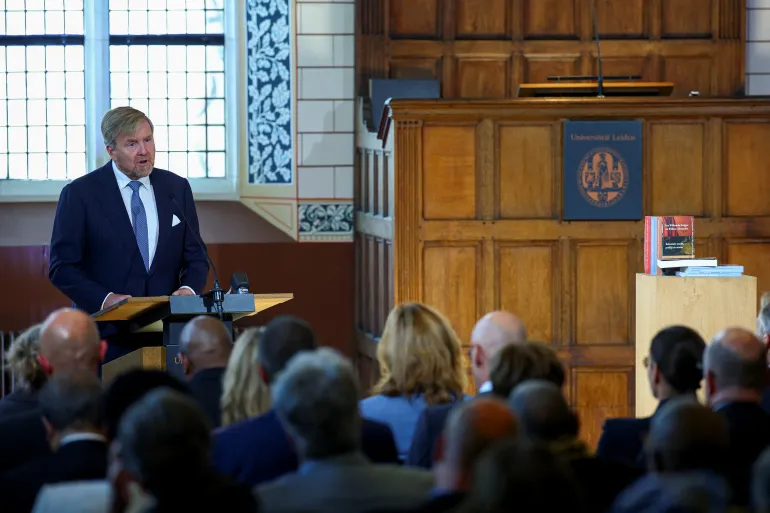
LEIDEN — A three-year investigation commissioned by Dutch King Willem-Alexander has concluded that his own House of Orange-Nassau actively supported colonialism and slavery for centuries, shared responsibility for the survival of the Dutch slave trade and accumulated substantial wealth from the colonial system.

The independent study by Leiden University involved about 60 researchers and examined the monarchy’s colonial history from 1600 to the present. Researchers were given access to relevant material in the Royal House’s private archives, with the findings published across five books.
Researchers concluded that the involvement of the House of Orange-Nassau in colonial exploitation was “wholehearted” and found that successive rulers generally showed little opposition to slavery. While monarchs rarely determined colonial policy themselves, the study found that they supported the system, approved the suppression of resistance and benefited from colonial rule.
The financial benefits were particularly substantial in the Dutch East Indies, now Indonesia. Researchers estimated that the royal family’s 19th-century colonial profits would be worth about $650 million in modern terms. The study found that relatively little of the family’s income came directly from the transatlantic slave trade, with much larger gains generated through the wider colonial economy.
The findings cover a period in which the Netherlands controlled territories across Southeast Asia and the Caribbean, including modern-day Indonesia and Suriname. The Dutch were major participants in global slavery from the 17th century until slavery was abolished in Dutch colonies during the 19th century.
Willem-Alexander commissioned the investigation in 2022 as the Netherlands faced growing scrutiny over its colonial history. The Royal House said it had no substantive involvement in designing the research or determining its conclusions.
Receiving the findings at Leiden University, the king acknowledged that his predecessors had actively supported colonialism and slavery and described the conclusions as distressing and challenging.
“You have shown that our stadholders and monarchs actively supported colonialism and slavery, and approved the suppression of resistance,” Willem-Alexander said. He acknowledged that the royal house therefore carried joint responsibility for maintaining the system.
The findings go further than the acknowledgement the king made in 2023, when he apologised for the role of the Netherlands in slavery and for the failure of his ancestors to act against it.
The Dutch government had issued its own apology in 2022 and established a €200 million fund for initiatives addressing the legacy of slavery, while ruling out direct reparations. The latest research is expected to strengthen an existing debate over whether acknowledgement and apologies should be followed by further measures.
The National Institute for the Dutch Slavery Past and Heritage welcomed the king’s decision to commission the research but said the findings should contribute to education, public discussion and consideration of reparatory justice.
Willem-Alexander said the study would not mark the end of the royal family’s engagement with its colonial history, acknowledging that the effects of slavery and colonial exploitation continue to be felt in Dutch society.
Anyone with additional information can contact the press desk at press@townpress.co.za or drop a tip on our annonymous platform https://tips.townpress.co.za/