
Zimbabwe wants to replace the US dollar, but has changed one rule


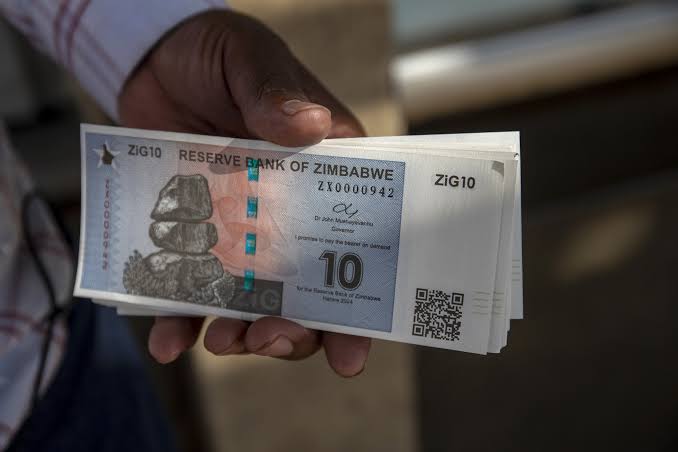
HARARE — Zimbabwe’s ambition to make the ZiG its sole domestic currency now depends on economic conditions rather than a fixed deadline, leaving households and businesses with a longer test of whether the local currency can protect their money.

The Reserve Bank of Zimbabwe’s foreign-exchange guidelines explicitly describe the transition as conditional, rather than date-based. Before exclusive domestic use of the ZiG, the bank wants sustained low inflation, sufficient foreign reserves, reliable access to foreign exchange and a stable financial system. For now, its guidelines allow purchases and sales in either local or foreign currency.
That approach qualifies earlier ambitions to end domestic dollar use by 2030. It also recognises the difficulty of persuading people to hold a currency after repeated episodes of inflation and depreciation have damaged confidence in Zimbabwe’s money.
Introduced in April 2024, Zimbabwe Gold, commonly called the ZiG, is backed by foreign currency and precious-metal reserves, according to the central bank. Its introduction was intended to provide a more credible foundation for local money after the collapse in value of its predecessor. Rreports on Friday describes continuing public reluctance to trust the currency despite the government’s efforts to encourage its use.
There is evidence of economic improvement. The World Bank reports that annual local-currency inflation reached 2.9% in August 2026, alongside greater exchange-rate stability. It also says the gap between official and parallel-market exchange rates narrowed significantly, although Zimbabwe’s recovery remains vulnerable and public debt remains unsustainable.
Those improvements give the authorities a stronger case for the ZiG, but they do not establish that people are ready to abandon dollars. In its June economic assessment, FBC Holdings Research said demand for the US currency as a store of value remained strong, while some businesses continued to take parallel-market conditions into account when setting prices.
For a trader receiving ZiG but needing foreign currency to replenish imported stock, acceptance depends partly on being able to exchange those earnings reliably. For a household, the concern is whether money retained after payday will still buy the same essentials later. A stable official rate helps, but confidence also depends on access to currency and predictable rules.
The central bank’s transition conditions address some of those practical obstacles. They include reserves covering between three and six months of imports and a foreign-exchange system that meets legitimate demand. Its guidelines also state that a future single-currency system would retain foreign-currency accounts and specified foreign-currency investments, rather than eliminate every form of dollar holding.
FBC’s assessment cautioned that a complete transition would still be premature while important conditions remained only partly satisfied. It recommended retaining the multicurrency system until confidence in the ZiG could support voluntary adoption, backed by consistent fiscal and monetary policy.
The wider household picture also limits how much can be inferred from falling inflation. In September, the World Bank reported that economic growth had not yet produced broad improvements in employment or household incomes. Around 80% of Zimbabweans worked in the informal sector, with median monthly earnings of US$130.
Zimbabwe has made progress towards a more stable currency. Replacing the dollar will require that stability to endure long enough for businesses to price goods, workers to retain earnings and families to save in ZiG without expecting another abrupt loss of purchasing power.
Anyone with additional information can contact the press desk at press@townpress.co.za or drop a tip on our annonymous platform https://tips.townpress.co.za/