



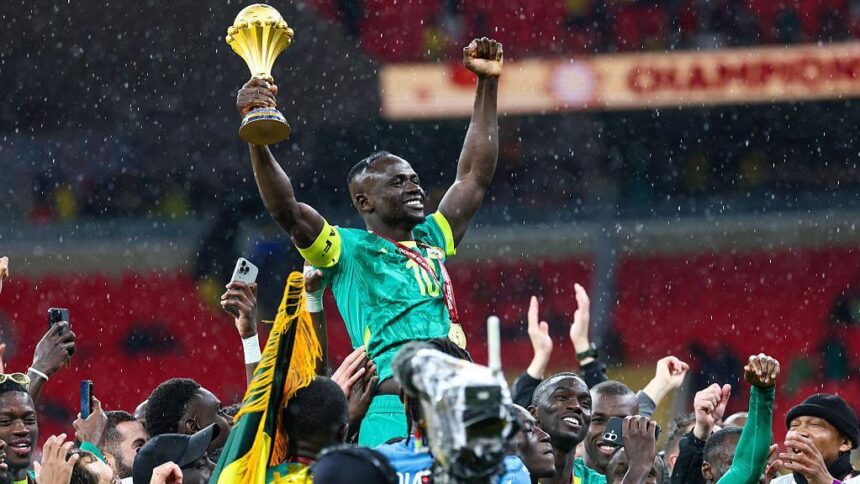
In a shocking twist for African football, Senegal’s 2025 Africa Cup of Nations (AFCON) title has been revoked and awarded to Morocco following a landmark ruling by the Confederation of African Football (CAF) on Tuesday. The decision comes more than two months after Senegal secured a 1-0 victory over the hosts in a dramatic final played on 18 January at Morocco’s Prince Moulay Abdellah Stadium.
The controversy erupted in the closing stages of the match when Senegal coach Pape Thiaw instructed his players to walk off the pitch after a late Senegalese goal was disallowed and Morocco were awarded a stoppage-time penalty. The team eventually returned following a plea from captain Sadio Mané, completing the match and claiming victory thanks to Pape Gueye’s extra-time strike.
CAF Appeal Board Overturns Senegal Victory
CAF’s Appeal Board has ruled that Senegal forfeited the final under Articles 82 and 84 of the AFCON regulations, which state that any team leaving the pitch without referee approval automatically loses the match. Consequently, the match result has been recorded as a 3-0 victory for Morocco, granting the hosts their second AFCON title and ending a 49-year wait.
The decision followed an appeal lodged by the Royal Moroccan Football Federation (FRMF), which argued that Senegal’s walk-off violated competition rules. CAF confirmed the appeal was admissible and upheld the protest, while Senegal’s original victory was nullified.
Controversial Incidents Reviewed
The ruling also addressed several contentious moments from the final. CAF partially upheld sanctions against Moroccan player Ismaël Saibari for unsporting conduct, reducing his suspension to two official matches, with one match suspended. The federation also reduced the fine for ball-boy misconduct to $50,000, while confirming a $100,000 fine related to VAR interference.
The decision has sparked widespread debate across African football, with fans and pundits questioning CAF’s judgment. Many accused the confederation and Morocco of corruption, while Senegalese authorities called for an independent international investigation.
Senegal to Appeal to the Court of Arbitration for Sport
In response, the Senegalese Football Federation (FSF) has confirmed plans to challenge CAF’s ruling at the Court of Arbitration for Sport (CAS) in Lausanne. The appeal process could take up to a year to reach a final decision. Senegal’s government has also demanded an independent inquiry into the confederation, citing potential corruption and a violation of sporting ethics.
Senegal’s Premier League stars, including Sadio Mané, Idrissa Gueye, Mamadou Sarr, and Édouard Mendy, have voiced their frustration online, mocking the ruling while celebrating their initial triumph.
Morocco Welcomes Historic AFCON Victory
For Morocco, the ruling marks a long-awaited triumph, with the FRMF applauding the decision for upholding the integrity of competition regulations. The federation emphasised that the appeal was focused on procedural fairness rather than challenging the sporting performance of the teams.

This controversial decision also raises questions about the handling of match incidents in African football and their alignment with IFAB’s Laws of the Game, which generally regard referee decisions on play-related facts as final.
The Controversial Final: Key Moments
- 90+2: Senegal goal disallowed, sparking protests
- 90+8: Morocco awarded a stoppage-time penalty, prompting Senegal’s walk-off
- 90+20: Senegal players return to pitch after Sadio Mané’s intervention
- 90+24: Brahim Diaz misses Panenka penalty; Senegal advances to extra-time
- 94: Pape Gueye scores decisive goal, Senegal initially crowned champions
Despite winning on the field, CAF’s ruling now records Morocco as 3-0 winners, marking a historic and highly controversial outcome in African football.
African Football Faces Scrutiny
The ruling has ignited debate across the continent, with commentators noting the impact on AFCON’s credibility, the future of CAF regulations, and the principles of sporting fairness. Some fans and experts have questioned whether the decision aligns with international football laws, while others have called for reforms to prevent similar controversies.
As Senegal prepares to take their case to CAS, the African football community awaits the final word on what has been described as one of the most extraordinary rulings in the history of the Africa Cup of Nations.













Facebook Comments