US and South Africa Relations Reach New Low as Tensions Over Israel Grow


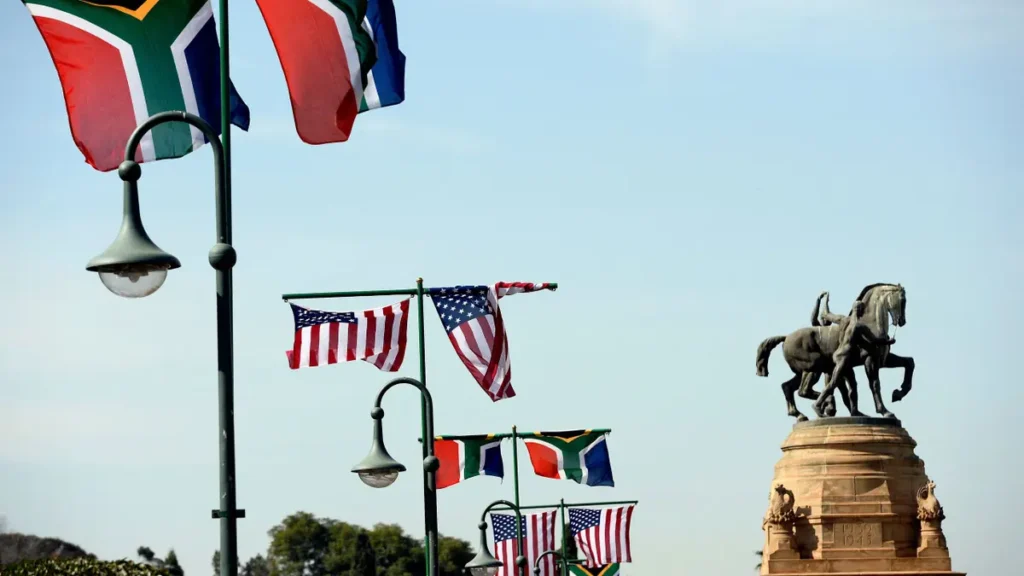
Relations between South Africa and the United States have deteriorated further, with analysts warning that diplomatic friction is likely to persist throughout the remaining three years of President Donald Trump’s term.

The strain is largely driven by Pretoria’s stance on Israel and its active role in the International Court of Justice (ICJ) case alleging that Israel’s military operations in Gaza may amount to genocide, a move that has drawn firm criticism from Washington.
Diplomatic Dispute Moves Into the Public Arena
Tensions escalated after a public exchange between US Senator Marco Rubio and Minister of International Relations Ronald Lamola, who defended South Africa’s foreign policy and reaffirmed its commitment to acting independently while maintaining respectful international partnerships.
Sanctions Viewed as Increasingly Likely
Although a complete collapse in relations is considered unlikely, experts believe that targeted sanctions or visa restrictions aimed at senior South African political figures are becoming more probable. Individuals regularly mentioned by political observers include former international relations minister Naledi Pandor, former US ambassador Ebrahim Rasool, and Economic Freedom Fighters leader Julius Malema.
Analysts argue that such measures would allow the US government to appear firm without undermining broader trade or security cooperation. They note that various American constituencies, including Afrikaner lobby groups, are shaping congressional sentiment and encouraging a tougher line on Pretoria.
Independent political commentator Dr Tshwale told The Citizen that Washington is expected to initiate any punitive action, viewing pressure on Pretoria as a means to force alignment with US foreign policy priorities. He added that legislative proposals targeting ANC-linked individuals suggest that sanctions are steadily becoming a realistic prospect.
Core Issues Driving the Rift
The disagreement between the two nations runs deeper than disputes with specific interest groups. Pretoria’s legal challenge against Israel at the ICJ, alongside its wider criticism of US policy in the Middle East, has placed the two governments on sharply diverging paths.
North-West University analyst Dominic Maphaka noted that full bans on ministers are unlikely, but warned that the US may consider further retaliatory measures as tensions mount.
Despite the friction, experts stress that neither country is expected to cut ties. The US remains a major global power and key investor, while South Africa holds significant regional and economic influence as the most industrialised country on the continent.
Possible Consequences for South Africa
Analysts caution that any sanctions could erode investor confidence at a time when South Africa is already grappling with economic challenges. Advocacy groups in the US have continued to push for greater pressure on Pretoria, adding to uncertainty.
Public reaction within South Africa is deeply divided. Some citizens view the government’s stance as a principled defence of sovereignty, while others fear that heightened tensions with Washington could worsen the country’s fragile economic outlook.
Standoff Likely to Continue
With both capitals entrenched in their positions and diplomatic rhetoric hardening, analysts expect the standoff to extend throughout Trump’s presidency. While the two nations will remain obliged to cooperate on key issues, disagreements over foreign policy, sovereignty, and the Israel–Gaza conflict are likely to define their relationship for the foreseeable future.