



Pretoria, South Africa – Email scams continue to surge across South Africa, with security experts warning that simply opening suspicious messages can expose individuals to cyber threats. The Security Cluster head of Maphorisa Initiatives confirmed that more than 12,000 people have reached out to their offices this year seeking help to remove their images and other data from the internet, address suspicious monitoring on their devices, or recover hacked email accounts.
These cyber intrusions do not only compromise personal privacy but also fuel a global underground market. Stolen data is being traded on dark web platforms, including Tor, and is increasingly used in fraudulent schemes. In many cases, hackers avoid changing passwords, instead operating alongside legitimate users, quietly monitoring accounts and exploiting access. Victims are often unaware that their devices are being tracked, leaving them vulnerable to prosecution or financial losses from activities carried out under their names.
Experts caution that the first line of defense begins with how users handle emails flagged as spam. When a message lands in the spam folder, it is for a reason: the provider has detected patterns of fraud or malicious activity. Clicking links in these emails, even out of curiosity, can activate malicious downloads, redirect users to phishing sites, or silently install monitoring tools.
To collectively reduce the impact of these so-called “email trojans,” cybersecurity practitioners recommend a simple but powerful routine published this month:
-
Open the suspicious email carefully, but never click on links or attachments. Click the ring (options) icon and select “Block sender.”
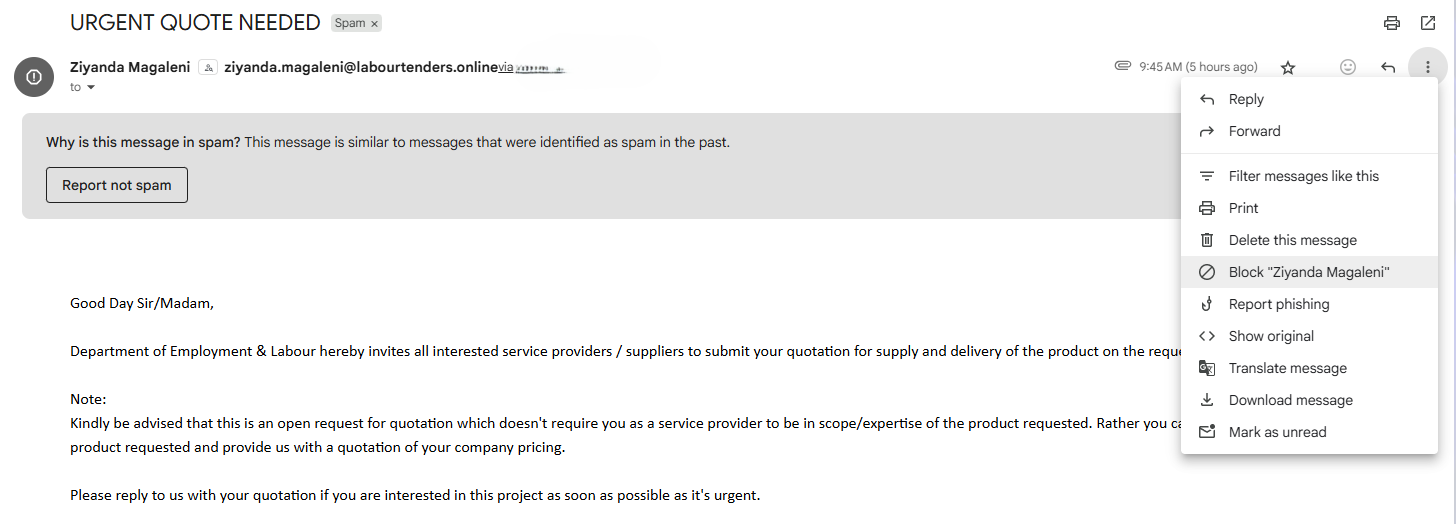
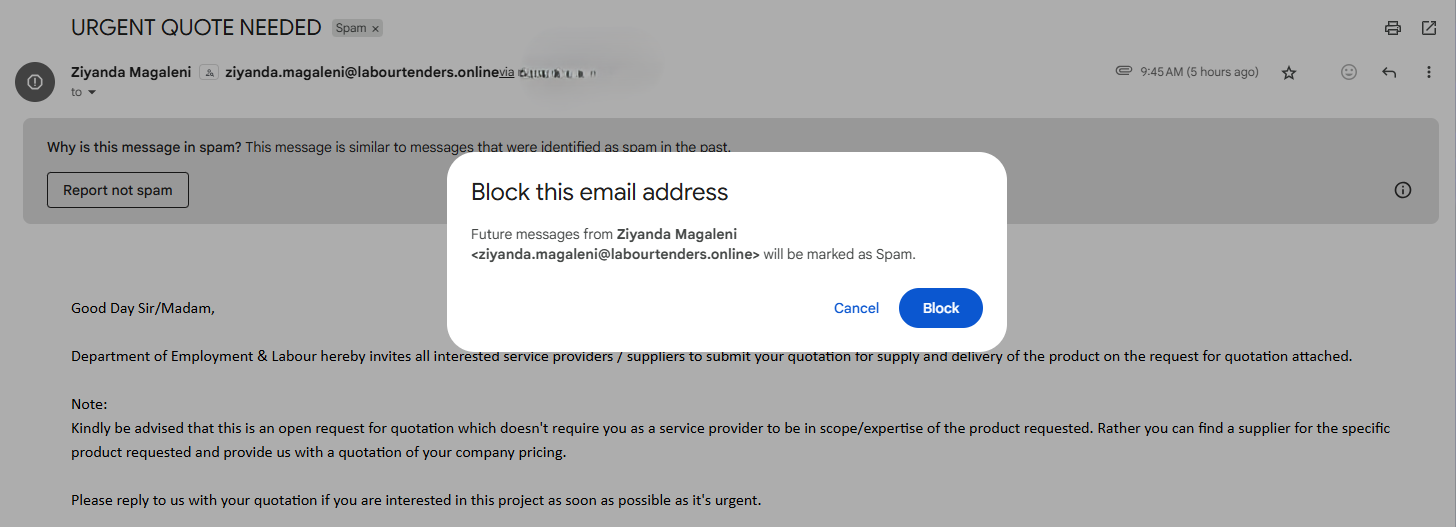
- A confirmation will appear; finalize by clicking “Block.”
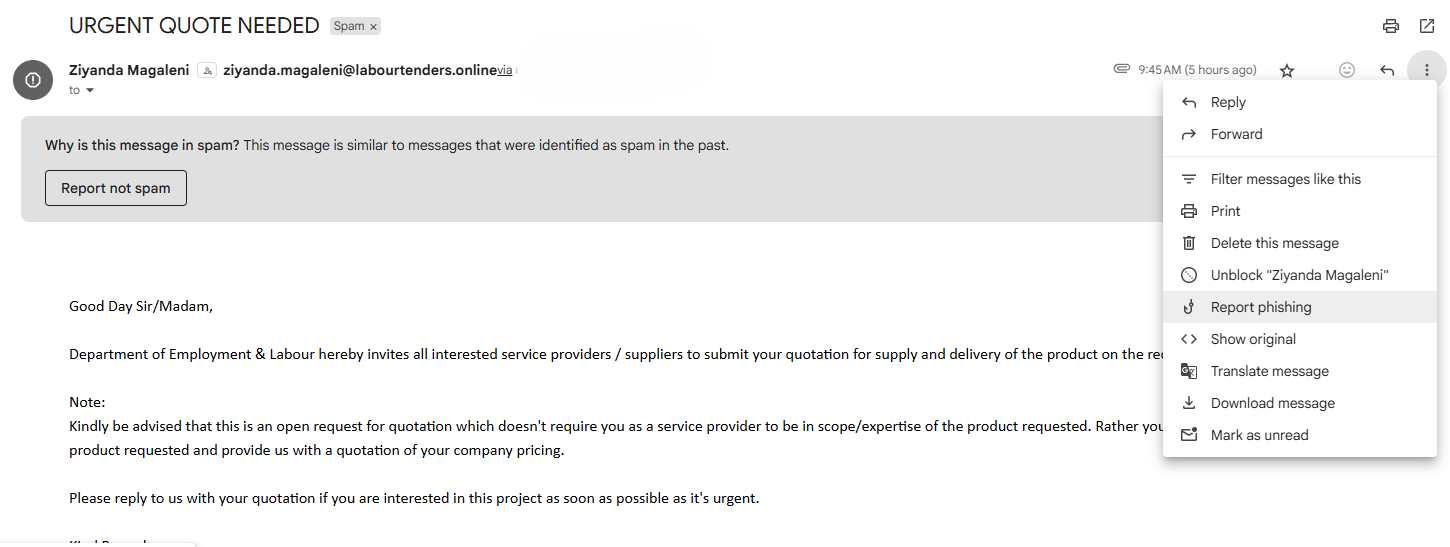
- Click the ring (options) icon again and select “Report phishing.”
-
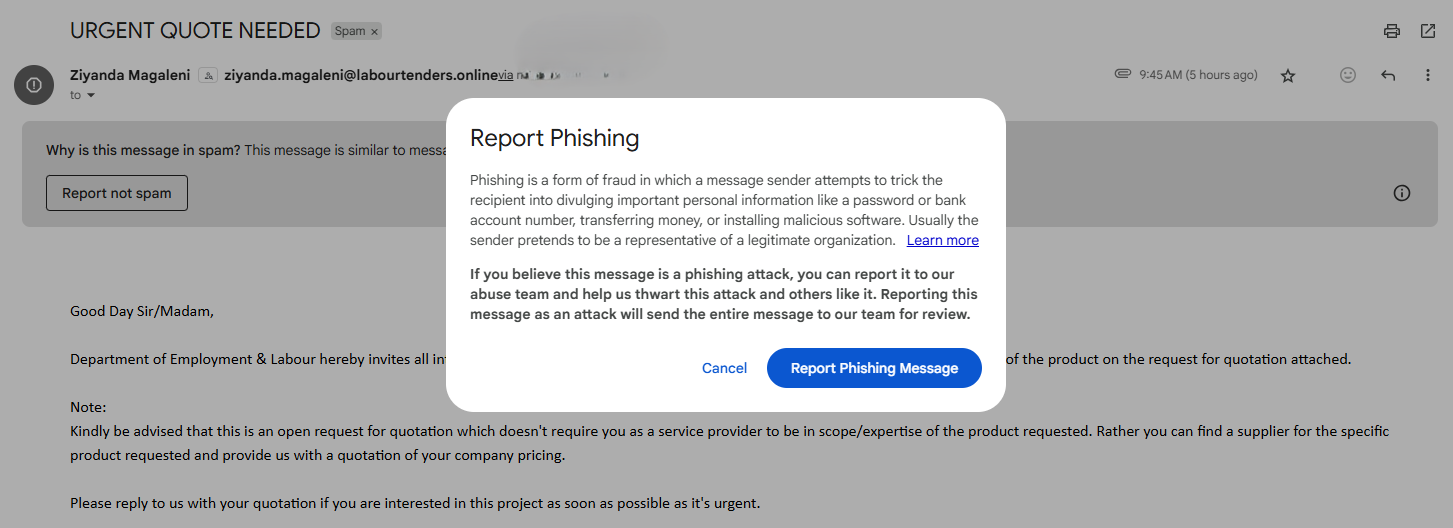
A confirmation will appear; finalize by clicking “Report Phishing.”” This reports the account to Google, which can deactivate the email and block the hacker’s IP address.
-
Delete the message, then check your spam folder monthly. Regular clearing prevents old scams from building up and helps your email provider refine its filters.
“Every individual who takes these small steps contributes to the wider fight against fraudsters,” Maphorisa Initiatives noted in its advisory. “When we report and block suspicious senders, we cut off channels that hackers use to exploit innocent people.”

With email remaining the gateway to most online accounts, experts stress that vigilance is no longer optional but essential. Users are urged to stay disciplined in managing their spam folders and to recognize that avoiding just one click could prevent weeks of recovery from identity theft or data abuse.
Anyone with additional information relating to this story can contact us through email press@townpress.co.za.
















Facebook Comments