


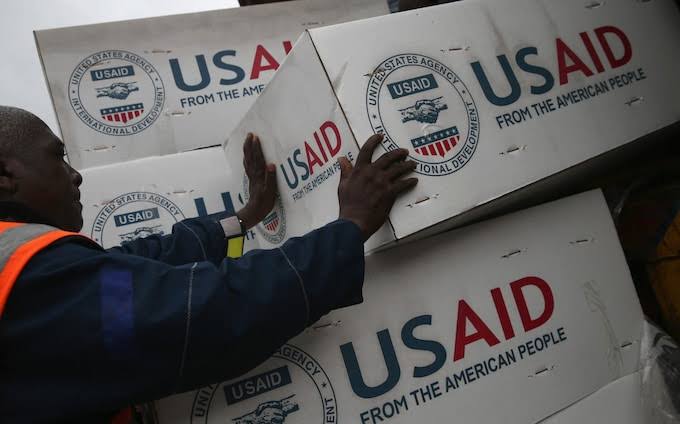
South Africa’s government has appointed Deloitte & Touche to investigate the management of United States Agency for International Development (USAID) grants allocated to HIV/AIDS programmes, Health Minister Aaron Motsoaledi announced on Monday.
This follows U.S. President Donald Trump’s decision to temporarily suspend financial support for medication and key positions under USAID for 90 days, citing concerns over large-scale corruption in the distribution of funds.
As a result, USAID-funded partners across South Africa have received stop-work orders, leading to staff retrenchments and an abrupt halt in critical healthcare services.
The consequences are already apparent with disruptions in healthcare provision, job losses, and lives at risk.
By mid-January, essential health services had begun shutting down, affecting HIV testing, treatment, and prevention, as well as sexual and reproductive health services, gender-affirming care, mental health support, and harm reduction initiatives nationwide.
“We are busy with this process; we have met many people and found the complexity of what is involved. We have hired Deloitte & Touche. They said it will take them about a month just to go into this thing. We have discovered that part of this money is not going to patients; again, it’s going to administration—huge amounts of money.”
In response, the government is set to launch the 121 More People campaign today, aiming to place 121 additional individuals on antiretroviral (ARV) treatment to ensure that efforts to combat HIV/AIDS continue.
“In 2010, when we wanted to put up the world’s biggest HIV Counselling and Treatment campaign, we were asked the same question. The answer is simple: when people are dying, you don’t stop and ask these questions; you save lives and things will resolve themselves. I will give you that same answer today,” Motsoaledi said.
Wesley Solomon, Life Sciences and Healthcare Leader at Deloitte Africa, confirmed that the firm is prepared to assist the National Department of Health with data analysis if required.
Meanwhile, project leaders within USAID-funded programmes have reported a lack of communication from the organisation, despite seeking clarity. Some were instructed to submit revised budgets limited to services covered under a waiver.

The Board of Universities South Africa (USAf) has warned that the suspension of aid threatens the progress made through joint HIV/AIDS initiatives and could damage the U.S.’s global standing in the fight against poverty and disease.
USAf chairperson, Professor Francis Petersen, highlighted that past collaborations between South Africa and the U.S. had facilitated a massive ARV rollout for nearly six million South Africans.
“In the short term, we need strong lobbying by our research partners in the United States to impress upon the Trump administration the interdependence of nations. The USA needs other nations as much as they need the USA,” Petersen said, emphasising the need to diversify research funding.
The South African National AIDS Council’s civil society forum reported that approximately 9,000 individuals in Mpumalanga, Limpopo, and Gauteng have lost access to needle exchange and opioid substitution therapy, increasing their risk of HIV, hepatitis C, and drug overdoses. While some public clinics remain open, most no longer offer these vital services.
Francois Venter, an HIV clinician and director of the Ezintsha research centre in Johannesburg, described the dire situation:
“Health workers and people have no idea what is happening across the region. People are going to start dying soon,” he warned, adding that systems built over decades had begun to collapse within just one week.










Facebook Comments