


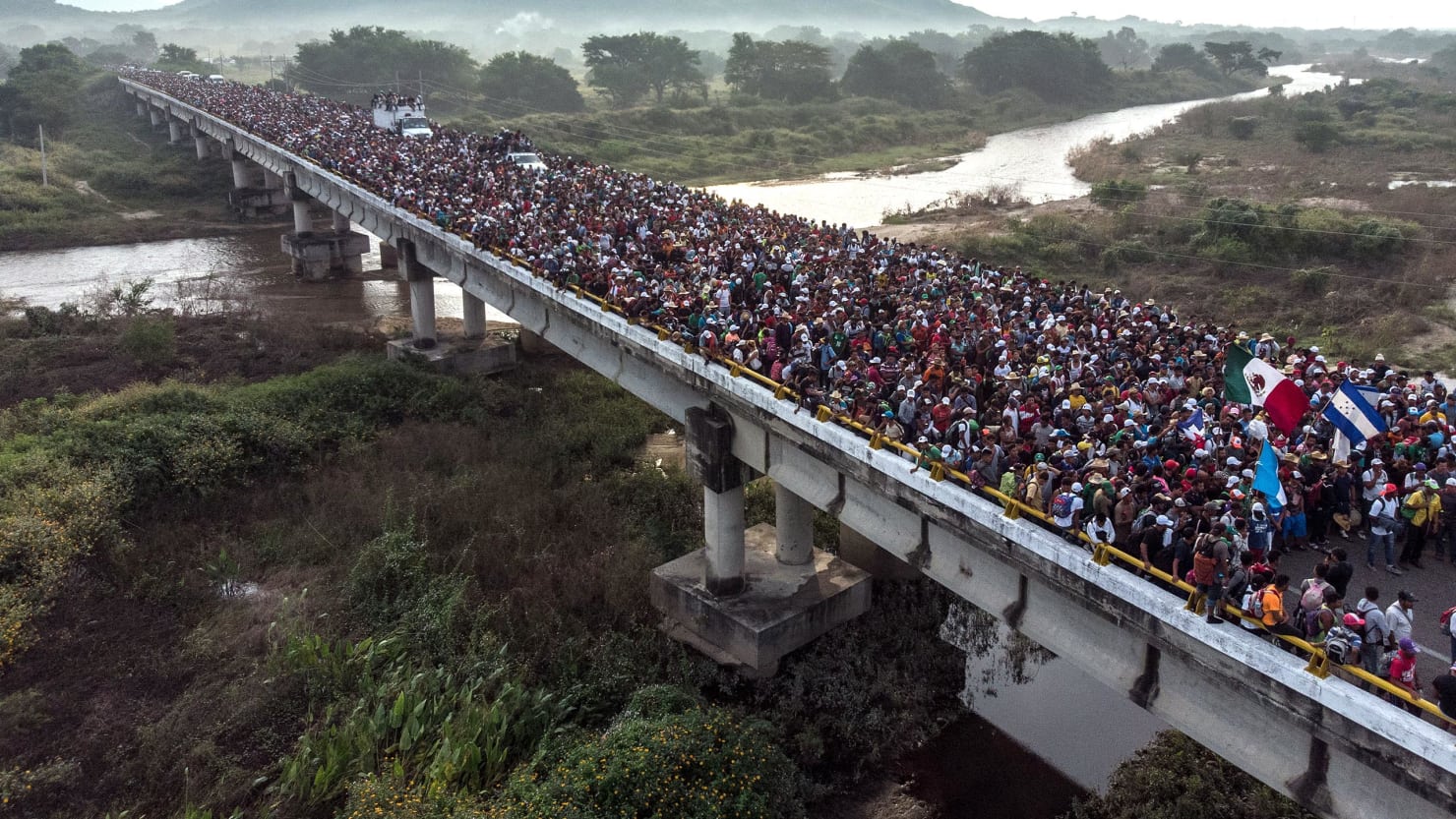
TIJUANA, Mexico— The U.S. border has proved impossible so far for the more than 7,000 migrants anxiously arriving in Tijuana, where they’re waiting in the squalor of a small baseball stadium-turned-tent city. It’s just a stone’s throw from the border they hope to cross, which many could not imagine would be so difficult.
Scenes of migrants fleeing tear gas shot their way by U.S. Border Patrol brought condemnation and accusations of excess. The Sunday protest was peaceful, several participants told The Daily Beast. The protesters, including women and children, first encountered Mexican police, but detoured around them and headed toward the border. There, according to U.S. Customs and Border Patrol, they breached the fence.
The migrants say they wanted nothing more than to ask for answers as to why they were unable to cross the border or make asylum claims.
But the tough treatment at the border brought home a rude reality for many migrants in the caravan: that their idealized vision of the United States—a kind and just country willing to welcome people wanting nothing more than to work or seek safety—has put obstacles in their path.
Asylum claims are increasingly hard to make as fewer than 100 migrants a day are allowed to approach the border crossing and receive a “credible fear” interview, the first step in the process.
At the Chaparral border crossing, Central American migrants and Mexicans hailing from states rife with violence lined up to put their name on a list to have their claims heard.
The arrival of so many caravan travelers and images of clashes with police have exposed an unseemly underbelly of xenophobia. A poll in the newspaper El Universal showed 49 percent of Mexicans saying caravans shouldn’t be allowed to cross the country.
“First Mexico and Mexicans,” read one comment in response to the polls.
“It’s anti-poor people,” said Javier Urbano, a professor at the Ibero-American University in Mexico City, who studies immigration. Immigration from the United States, Canada, and Europe has been welcomed, he said—in contrast to Central Americans—as such migrants tend to be whiter and come from wealthier countries middle-class Mexicans say they want to emulate.

Some migrant activists have questioned the wisdom of convening caravans, saying the tensions in Tijuana were predictable—especially as so many migrants arriving in one place would inevitably strain resources.















Facebook Comments